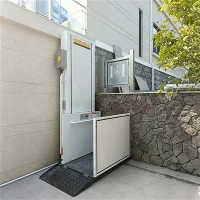
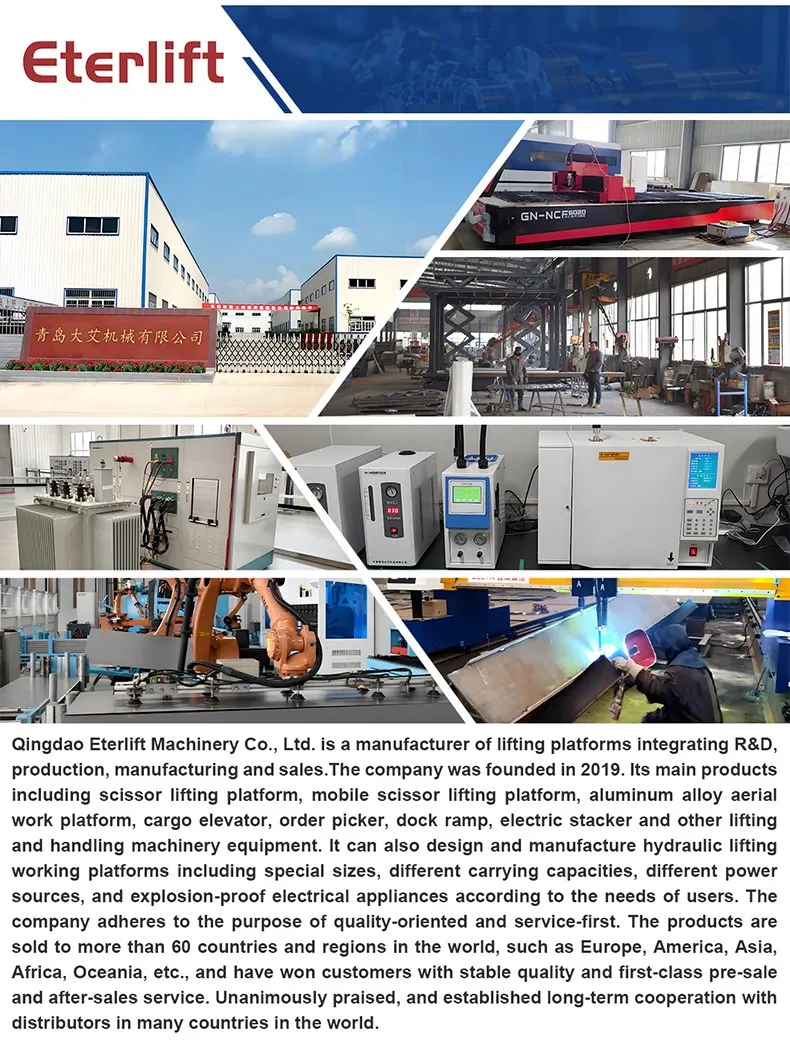
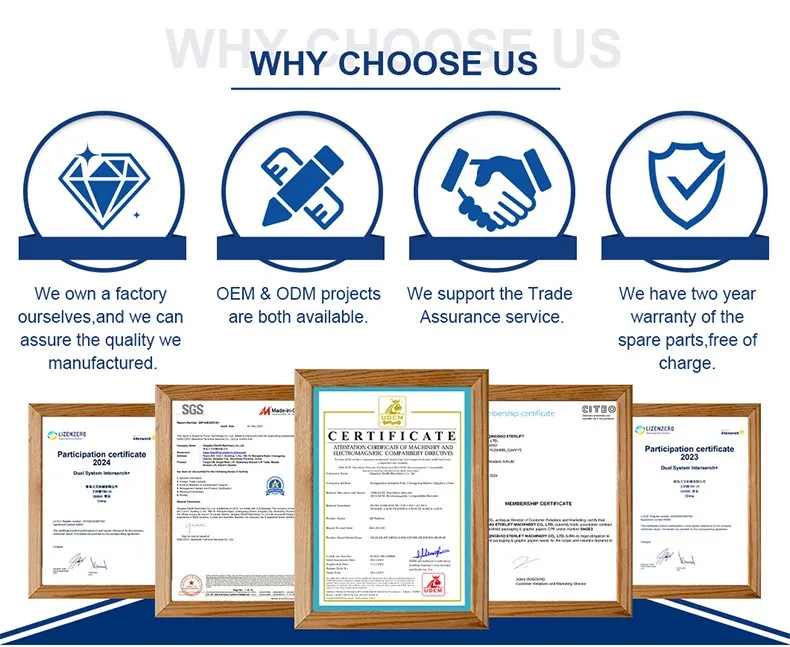
Qingdao Eterlift Machinery Co., Ltd. is one of the leading manufacturers and suppliers of wheelchair lifts for improved accessibility in China, also supports customized service. As we have world-leading production equipment and strong manufacturing capabilities, we warmly welcome you to buy durable wheelchair lifts for improved accessibility made in China here from our factory.

|
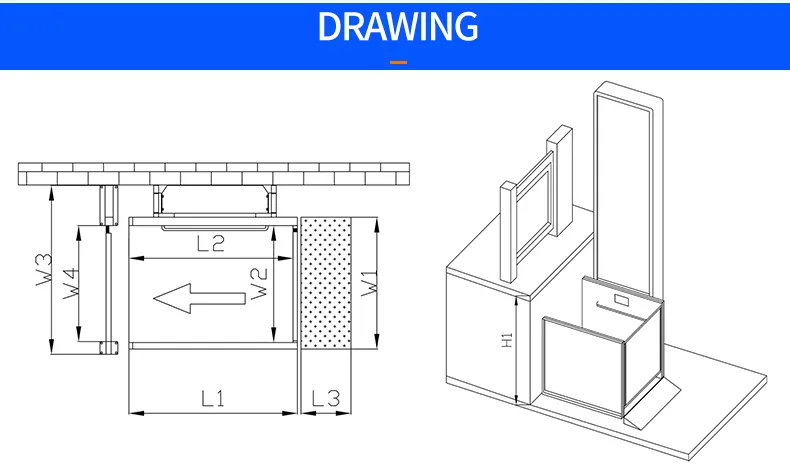
Size |
L1(cm) | 70-140 |
| L2(cm) | 60-130 | |
| L3(cm) | 50 | |
| W1(cm) | 50-100 | |
| W2(cm) | 40-90 | |
| W3(cm) | 80-1400 | |
| W4(cm) | 80 | |
| H1(cm) | 30cm to 1000cm(customized) | |
| voltage | 110V/220V/240V/380V/410V (50/60HZ) | |
| Motor | 1.5KW to 5KW | |
| Left door | YES/NO | |
| Right door | YES/NO | |
| Floor door | YES/NO | |
| Floor controller | YES/NO | |
| Automatic ramp | YES/NO | |
| Load capacity | 300KG | |
| Platform type | Pattern non-slip metal plate | |
| In and out direction | 90° Or 180°(customized) | |
| Working environment | Indoor and outdoor | |
| working temperature | -20°C - 60°C | |
| Installation mode | No foundation pit installation (fixed directly to concrete ground) | |
| Emergency stop button | Press the emergency button switch to control the machine to run, rise or fall | |
| Aluminum alloy bar |
When the platform is lowered will stop running immediately when it encounters an obstacle. |
|


When the lifting height of a wheelchair lift exceeds 3 meters, the total height of the guide rail will exceed 4 meters. To facilitate transportation, the guide rail is usually cut into two sections. Sticking at the guide rail connection of the wheelchair lift is a common installation and maintenance problem. This is usually caused by alignment errors, assembly tolerances, or environmental factors. The following steps can be used to systematically solve this problem:
1. Determine the Root Cause
Before solving the sticking problem of the wheelchair lift, it is necessary to determine the cause of the sticking. At this time, the aluminum alloy decorative panel on the surface of the wheelchair lift needs to be removed to observe the cause of the sticking at the guide rail connection. The most common problems are:
Misalignment between the upper and lower guide rail sections (most common)
The foundation or wall mounting points are not perpendicular
Deformation of the guide rail ends during transportation or installation
Improper processing or burrs at the connection
Loose or overtightened connecting bolts causing guide rail deformation
2. Correct the Wheelchair Lift Guide Rail Connection to Align the Rails
Slightly loosen the guide rail connectors to allow some movement of the rails. Completely align the upper and lower sections of the guide rail (for household wheelchair lifts, the allowable deviation at the connection should usually be ≤0.5 mm), and then re-tighten the connectors. Perform a lifting test on the lift. If the sticking disappears, it is best to perform simple welding on the outside of the guide rail connection to prevent the guide rail connectors from loosening and causing sticking again.
3. Check and Repair the Wheelchair Lift Guide Rail Connection Surface
If the problem cannot be solved through step two, the guide rail connectors need to be removed and checked for:
Burrs, welding slag, paint accumulation, edge deformation, etc. at the guide rail connection.
If these problems exist, they need to be cleaned, and then repeat step two.
Do not over-grind, as this will affect the strength and guiding accuracy of the guide rail.
4. Check the Condition of the Wheelchair Lift Guide Rollers/Sliders
Deformation or damage to the guiding components usually exacerbates the sticking problem. Check for uneven wear and other problems. After the inspection, apply lubricant to the guide sliders. 5. Inspect the mounting base and fasteners
Ensure that the wall or support column where the wheelchair lift rails are installed is vertical and that the rails do not have any gradual bending. If installed on concrete, confirm that there is no subsidence under any section of the rail. In some cases, refastening or adding intermediate support brackets near the joints can resolve the problem.
7. Perform load and operation tests
After resolving the problem, run the lift without a load first, and then run it under the rated load.
Observe whether the wheelchair lift's speed is stable, whether there is noise at the joints, and whether there is any sudden resistance or vibration. The platform should move smoothly through the joints, and the speed should not fluctuate.
Hot Tags: wheelchair lifts for improved accessibility, China, manufacturers, suppliers, factory, customized, buy, cheap, for sale, made in China, Elevator For Home, Hydraulic Wheelchair Lift For Disable People, Porch Lift Elevator For Wheelchair, Residential Vertical Platform Lifts, Vertical Wheelchair Lift, Wheelchair Lift Elevator For Disabled