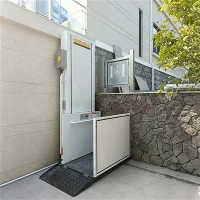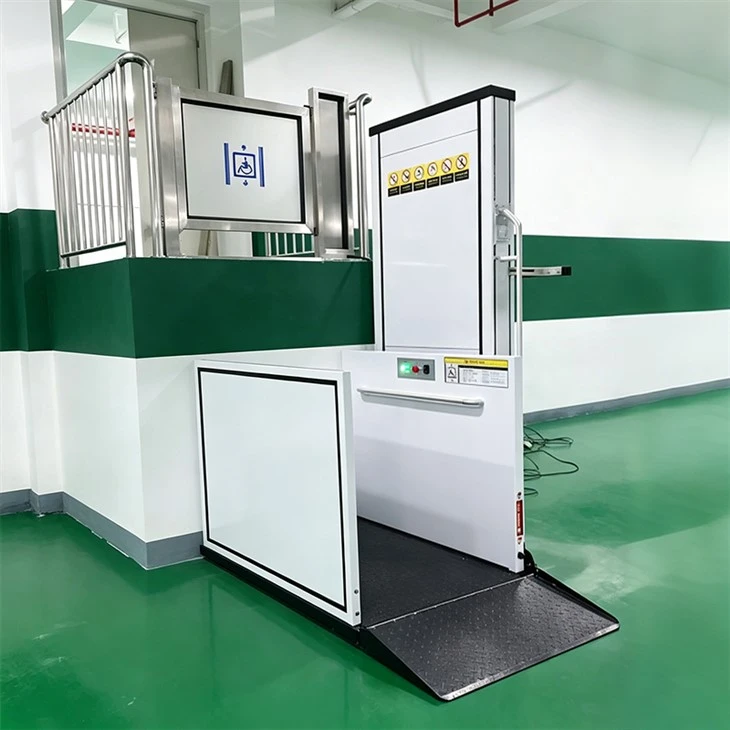

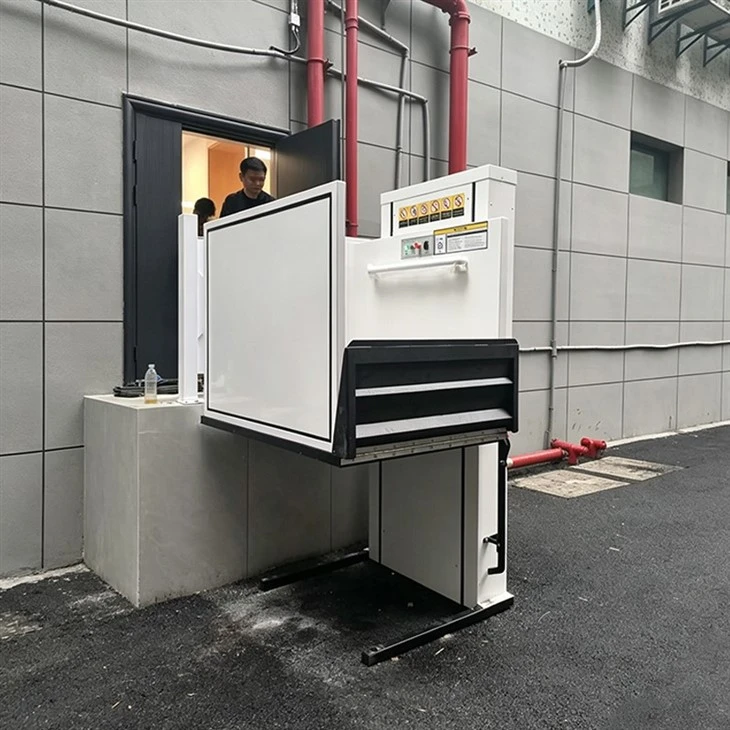
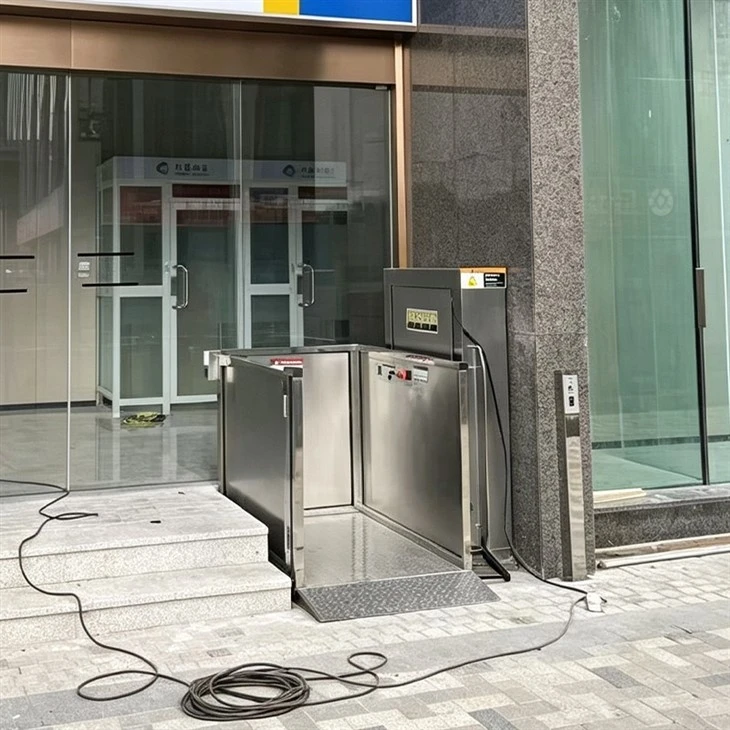
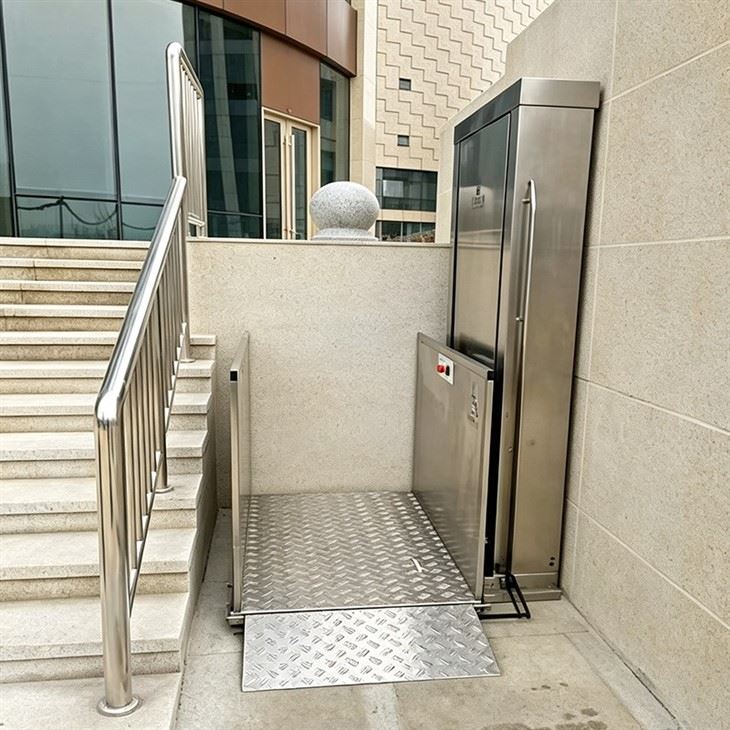
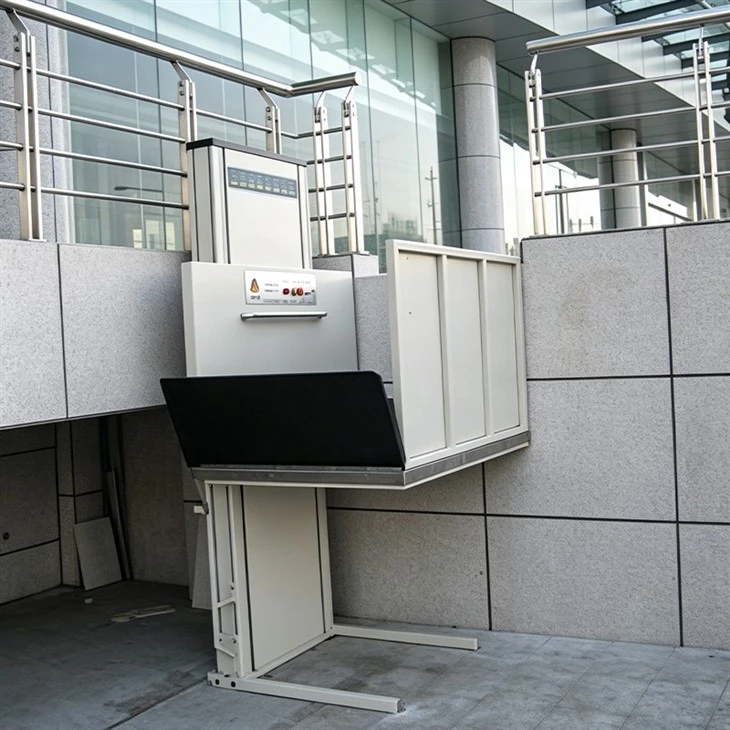
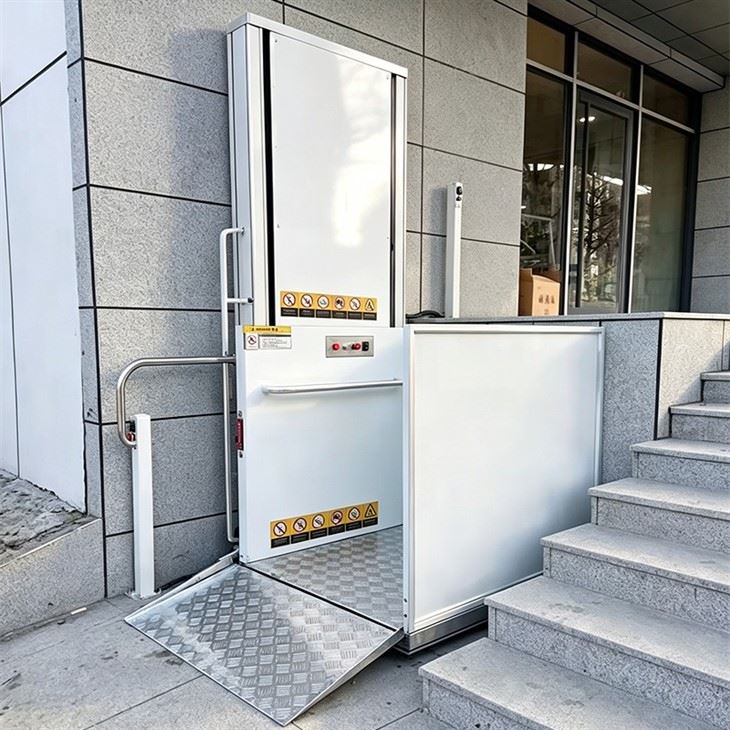
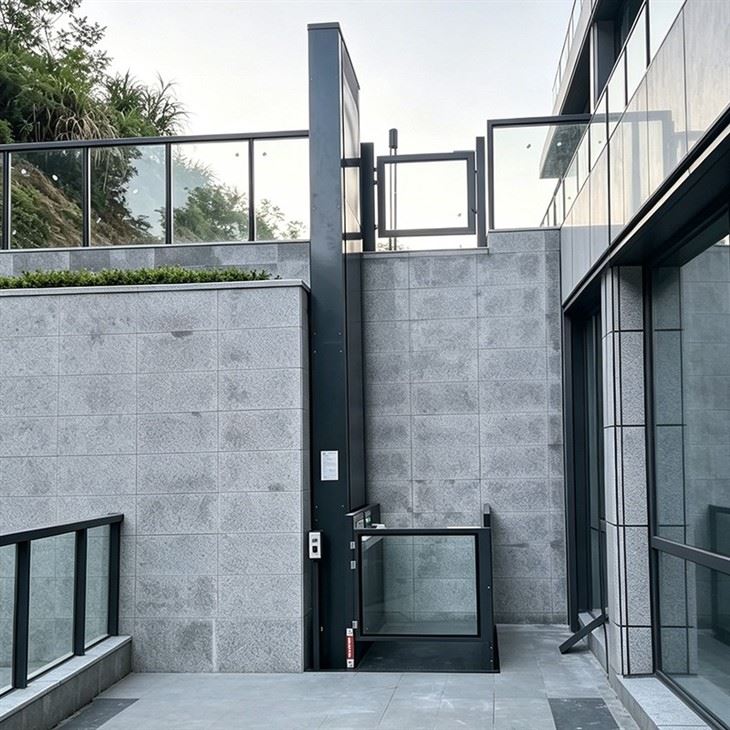
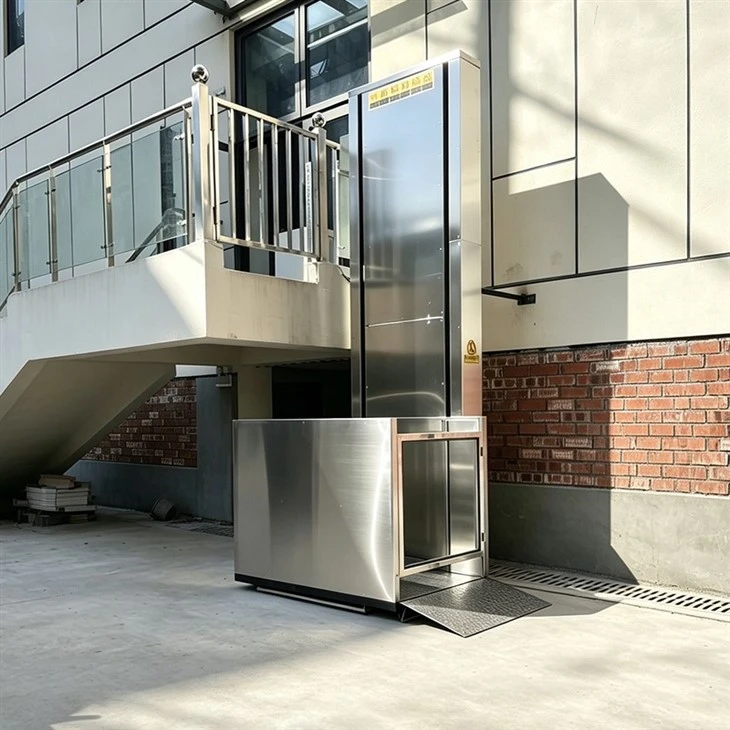
Qingdao Eterlift Machinery Co., Ltd. is one of the leading manufacturers and suppliers of wheelchair manlift in China, also supports customized service. As we have world-leading production equipment and strong manufacturing capabilities, we warmly welcome you to buy durable wheelchair manlift made in China here from our factory.

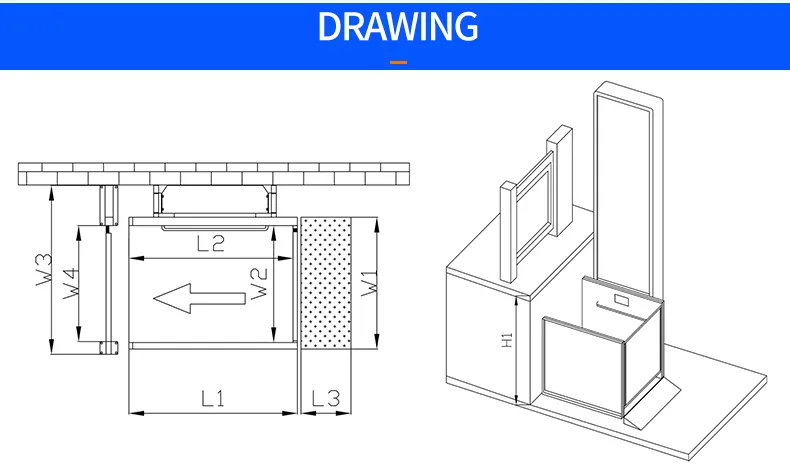

|
Size |
L1(cm) | 70-140 |
| L2(cm) | 60-130 | |
| L3(cm) | 50 | |
| W1(cm) | 50-100 | |
| W2(cm) | 40-90 | |
| W3(cm) | 80-1400 | |
| W4(cm) | 80 | |
| H1(cm) | 30cm to 1000cm(customized) | |
| voltage | 110V/220V/240V/380V/410V (50/60HZ) | |
| Motor | 1.5KW to 5KW | |
| Left door | YES/NO | |
| Right door | YES/NO | |
| Floor door | YES/NO | |
| Floor controller | YES/NO | |
| Automatic ramp | YES/NO | |
| Load capacity | 300KG | |
| Platform type | Pattern non-slip metal plate | |
| In and out direction | 90° Or 180°(customized) | |
| Working environment | Indoor and outdoor | |
| working temperature | -20°C - 60°C | |
| Installation mode | No foundation pit installation (fixed directly to concrete ground) | |
| Emergency stop button | Press the emergency button switch to control the machine to run, rise or fall | |
| Aluminum alloy bar |
When the platform is lowered will stop running immediately when it encounters an obstacle. |
|

Why Is the Maximum Speed of Wheelchair Lifting Platforms Limited to 0.15 m/s?
For mobility lifting platforms (wheelchair lifts) sold and installed across the EU, you will often notice a fixed rated speed limit of 0.15 m/s, as specified in EN 81-41:2024. Many customers ask why wheelchair lift cannot run faster, even though higher-speed lifting equipment is technically achievable. This speed restriction is not an arbitrary design choice; it is rooted in user safety, mechanical protection limits, open-platform structure and EU regulatory classification.
Target Users with Limited Mobility
Wheelchair lifting platforms are designed for people with impaired mobility, including wheelchair users, the elderly and people with disabilities. Unlike passengers riding standard passenger elevators, most users on wheelchair lifts cannot adjust their body balance quickly when acceleration or deceleration happens. A sudden start or stop at higher speed creates obvious inertial force, which may cause the wheelchair to slide, tip forward or backward. Wheelchairs are only secured by hand brakes rather than rigid locking fixtures on the platform, leaving very little tolerance for impact loads. Slow speed reduces the risk of falls and injury for vulnerable users.
Safety Mechanisms Are Engineered for Low-Speed Operation
Most vertical wheelchair lifting platforms adopt hydraulic, screw or scissor lifting structures. Their anti-fall valves, backstop locks, overload protection and limit switches are validated under the EN 81-41 standard for speeds up to 0.15 m/s. Standard passenger elevators use sophisticated systems including speed governors, safety gears and buffers for high-speed emergency braking. The anti-fall hardware on mobility platforms relies on gradual mechanical locking. If the platform runs faster than 0.15 m/s, the braking distance increases sharply, and the impact force during emergency stop will exceed the design capacity of safety components, leading to potential failure of protection devices.
Open Guardrail Structure with Reduced Enclosure Protection
A large number of wheelchair lifting platforms for public and domestic use adopt open guardrails instead of fully enclosed elevator cars and sealed hoistways with double interlocked landing doors. Without full enclosure protection, higher travel speed raises the risk of limbs accidentally extending outside the guardrails, collision and jitter. Minor guide clearance, hydraulic pulsation or structural vibration will be amplified at higher speed, bringing discomfort and panic to passengers. Low speed acts as a core safety compensation for this open-style design.
Riding Comfort and Psychological Safety
Many users with mobility issues are sensitive to shaking, vertical movement and sudden changes of speed. The low speed of 0.15 m/s ensures smooth starting and stopping with minimal vibration. It avoids dizziness, anxiety and fear that often occur with faster lifting movement. This stable operation is a key requirement for accessibility equipment in public buildings, homes, schools and medical facilities in Europe.
EU Regulatory Classification Boundary
This speed threshold also creates a clear legal dividing line for CE certification.
When the speed is ≤0.15 m/s: The lifting platform is classified as a mobility lifting platform under the Machinery Directive (2006/42/EC, soon replaced by (EU) 2023/1230), complying with EN 81-41:2024. The conformity assessment and safety configuration are tailored for accessibility lifting platforms.
When the speed exceeds 0.15 m/s: The product will no longer fall under EN 81-41. It must comply with the Lift Directive 2014/33/EU, which requires full elevator-level safety systems, much stricter inspection and certification procedures, and greatly higher manufacturing and installation costs.
Speed Comparison for Reference
Wheelchair lifting platform: 0.15 m/s (9 m per minute) – lifting 1 metre takes around 6.7 seconds
Standard residential passenger elevator: 1.0 m/s – lifting 1 metre takes only 1 second
Conclusion
The 0.15 m/s speed limit for wheelchair lifting platforms is a balanced safety rule covering user characteristics, mechanical safety design, structural protection and EU compliance requirements. It keeps mobility access equipment safe, stable and cost-effective for barrier-free installation in the EU. Any wheelchair lift intended for the European market must follow EN 81-41:2024 to meet CE and local building accessibility requirements.
Hot Tags: wheelchair manlift, China, manufacturers, suppliers, factory, customized, buy, cheap, for sale, made in China, 3 5m Home Wheelchair Lift, Porch Lift Elevator For Wheelchair, Residential Vertical Platform Lifts, The Wheelchair Lift For The Villa, Vertical Wheelchair Lift, Wheelchair Lift