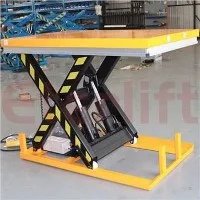
In the vast realm of material handling and logistics, efficiency and safety are paramount concerns. Whether it's within manufacturing facilities, warehouses, or distribution centers, the movement of goods plays a critical role in the seamless functioning of supply chains. One indispensable tool in this domain is the guide railway cargo lift, a mechanism designed to transport heavy loads with precision and reliability.
Guide railway cargo lifts, also known as freight elevators, are specialized lifting systems utilized for vertical transportation of goods. Unlike conventional passenger elevators, which prioritize human transportation, cargo lifts are engineered to withstand substantial weights and endure frequent use in industrial environments. These lifts often operate on a vertical rail system, providing a stable and controlled path for goods movement.
At the core of guide railway cargo lift design lies the delicate balance between material thickness and load capacity. The structural integrity of these lifts directly influences their ability to safely hoist and transport heavy loads to various levels within a facility. Understanding the intricate relationship between material thickness and load capacity is essential for engineers, manufacturers, and operators alike, as it dictates the lift's performance, reliability, and, most importantly, safety.
Material thickness serves as a fundamental aspect of the lift's construction, contributing significantly to its load-bearing capabilities. In the context of guide railway cargo lifts, the materials employed typically include steel alloys renowned for their robustness and durability. These materials are carefully selected and engineered to withstand the immense stresses imposed during lifting operations, ensuring the lift's longevity and operational efficiency.
The relationship between material thickness and load capacity in guide railway cargo lifts is multifaceted, influenced by various factors ranging from structural design to mechanical components. One primary consideration is the lift's intended application and the corresponding weight requirements. Cargo lifts used in heavy industrial settings, such as manufacturing plants or distribution centers, demand thicker materials to accommodate larger loads and withstand rigorous operational conditions.
Moreover, the design of the lift's supporting structure plays a pivotal role in determining its load capacity. The thickness of structural components, including columns, beams, and platforms, directly influences the lift's ability to distribute and support weight effectively. Engineers meticulously analyze the stress distribution across these components to optimize material thickness and ensure structural integrity under varying load conditions.
Additionally, mechanical elements such as pulleys, cables, and hydraulic systems contribute to the lift's overall load capacity. The selection of high-quality materials and precise engineering of these components are imperative for maintaining operational efficiency and minimizing the risk of mechanical failure. A comprehensive understanding of material properties and mechanical interactions is essential for designing cargo lifts that can reliably handle heavy loads without compromising safety.
Furthermore, advancements in materials science and engineering techniques continue to shape the landscape of guide railway cargo lift design. Innovative materials, such as high-strength alloys and composite materials, offer enhanced strength-to-weight ratios, enabling manufacturers to design lighter yet robust lift structures. Additionally, advancements in manufacturing processes, such as laser cutting and precision machining, facilitate the fabrication of intricate components with unparalleled accuracy and consistency.
In conclusion, the relationship between material thickness and load capacity is a critical aspect of guide railway cargo lift design. By carefully selecting materials, optimizing structural design, and leveraging technological advancements, engineers can develop cargo lifts that meet the demanding requirements of modern industrial environments. A thorough understanding of this relationship is essential for ensuring the safe and efficient vertical transportation of goods, ultimately contributing to the seamless functioning of supply chains worldwide.