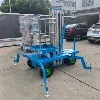
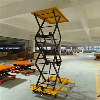
When choosing a power supply method for vertical mast lifts, several factors need to be considered to ensure the lift operates safely, efficiently, and within the desired performance parameters. Here's a breakdown of key factors to help guide your decision:
1.Application Requirements
Indoor vs. Outdoor Use: If the lift will be used indoors, an electric power supply (typically 110V or 220V) might be the best choice. For outdoor use, battery power is often preferred due to portability, and it eliminates the need for power cords.
Lift Capacity and Height: Larger lifts or those that need to lift heavier loads might require higher power supplies, potentially involving higher voltage or more robust batteries.
2.Power Source Type
Electric (AC): Electric-powered vertical mast lifts are typically used indoors. They are clean, efficient, and cost-effective for lifting tasks that do not require extensive range or outdoor conditions. These can run on standard electrical outlets or dedicated industrial circuits depending on the size and weight capacity of the lift.
Pros: Low operational costs, no need for battery charging, continuous operation as long as power is available.
Cons: Limited mobility due to the need to be near an electrical outlet, potential tripping hazards from cords.
Battery-Powered: Battery-powered lifts use rechargeable batteries (often lithium-ion or lead-acid). These are ideal for mobile use, particularly for outdoor work or in environments where electrical outlets are scarce.
Pros: Mobility and flexibility, no reliance on power outlets, can operate in remote locations.
Cons: Battery life and charging times, maintenance, higher initial costs for quality batteries.
Hybrid Systems: Some vertical mast lifts use a combination of both electric and battery power. These systems charge the battery using AC power but also allow for battery operation when needed. Hybrid systems are popular for lifts used in both indoor and outdoor settings.
Pros: Flexibility, longer operational times (with a backup power option), adaptability to various environments.
Cons: Can be more expensive due to the dual power sources, requires both power management and charging infrastructure.
3.Work Environment
Terrain: If the lift will be used on rough terrain, a battery-powered system may be more suitable as it offers mobility without the need for a power cord. Electric lifts, while great for flat, stable surfaces, may struggle or be unsafe on uneven terrain.
Weather Conditions: Battery-powered systems may be preferred for outdoor conditions, as they can be used in more varied weather situations. Be sure to select a battery with appropriate insulation for extreme temperatures.
4.Battery Life and Charging
Battery Capacity: Ensure that the lift's battery provides enough runtime for your needs. Consider factors like duty cycle (how long the lift is used during a typical workday), and whether the battery is replaceable or upgradeable.
Charging Time and Infrastructure: Make sure you have easy access to a charger if the lift is battery-powered. Look at charging times and whether you need a dedicated charging station for multiple units.
5.Cost Considerations
Initial Purchase Cost: Electric-powered lifts are generally cheaper upfront than battery-powered ones. However, battery-powered lifts may save you money in the long term if they reduce operational downtime or provide access to more areas.
Operational Costs: Electric lifts tend to have lower operational costs due to the price of electricity versus battery replacements or recharging costs.
6.Maintenance and Support
Electric Systems: Easier to maintain with fewer parts subject to wear and tear. Electric systems typically only need regular checks on wiring and electrical connections.
Battery Systems: Battery-powered systems require ongoing maintenance, including monitoring the charge, checking battery health, and replacing batteries periodically. Lithium-ion batteries tend to last longer than lead-acid batteries but may have higher upfront costs.
How To Choose The Power Supply Method For Vertical Mast Lifts?
Feb 12, 2025


Send Inquiry
Latest News