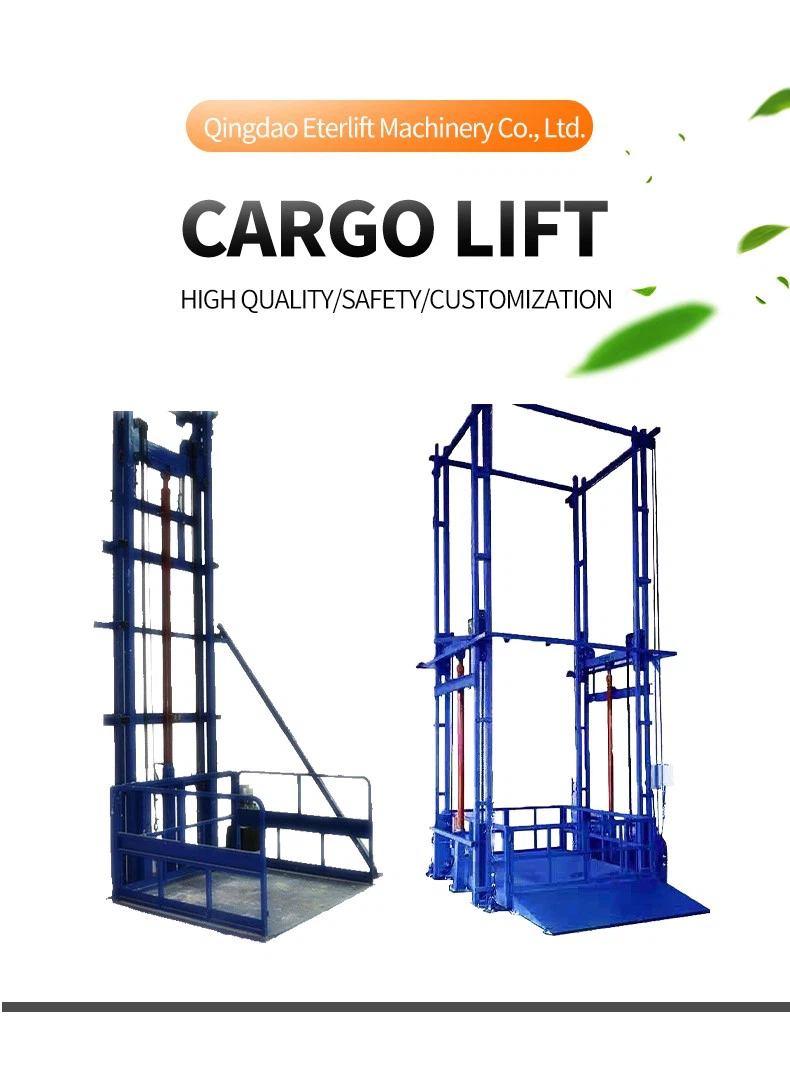


Key Components of a Guide Rail Hydraulic Freight Elevator
To understand how a guide rail hydraulic freight elevator works, it's important to familiarize yourself with its core components. Each part plays a critical role in ensuring safe and efficient operation:
Hydraulic Cylinder: The "power source" of the elevator. Usually vertically installed, it provides the lifting force needed to raise the cargo platform. Hydraulic cylinders are available in single-cylinder, double-cylinder, or four-cylinder configurations, depending on the load capacity and platform size. High-quality cylinders are made of high-strength steel and equipped with dust seals to prevent oil leakage and wear.
Guide Rails: The "tracks" that guide the elevator's movement. They are typically made of high-strength steel (such as Q345 manganese steel) and come in different types, including vertical guide rails, straight rails, and specialized rails. Vertical guide rails are the most common, ensuring the platform remains stable and aligned during vertical movement. Some models use T-shaped or U-shaped guide rails for enhanced lateral stability.
Cargo Platform (Carriage): The main structure that holds the goods. It is usually rectangular and made of thick steel plates to withstand heavy loads. For loads exceeding 10 tons, additional load-bearing auxiliary beams are required to reinforce the platform. The platform may also feature anti-slip surfaces and safety rails to prevent goods from slipping during transportation.
Hydraulic Power Unit: The "heart" of the hydraulic system. It consists of a motor, hydraulic oil pump, and oil return valve, and its oil output directly determines the elevator's lifting speed and load capacity. Power units are available in silent, standard, or high-efficiency models, allowing you to choose based on the noise requirements of your facility.
Safety Devices: Non-negotiable for industrial equipment. Key safety features include anti-fall locks (which automatically lock the guide rails in case of chain breakage or overspeed), overload protection (which stops the elevator if the load exceeds the rated capacity), emergency stop buttons, and hydraulic locks (which prevent the platform from falling if the oil pipe bursts). These devices ensure the safety of both goods and personnel.
Electrical Control System: Controls the elevator's operation, including lifting, lowering, and stopping. It consists of a main distribution box and floor control boxes, with digital display and programming options for easy operation. Some advanced models feature remote control or smart monitoring for added convenience.
Types of Guide Rail Hydraulic Freight Elevators
Guide rail hydraulic freight elevators come in several types to suit different applications and environments. Choosing the right type depends on your load capacity needs, lifting height, and installation space:
Single-Span vs. Double-Span Guide Rail Elevators: Single-span models have guide rails on only one side, occupying less space and allowing three-sided cargo loading/unloading-ideal for small warehouses or tight spaces. Double-span models have guide rails on both sides, offering enhanced stability and higher load capacity, making them suitable for heavy-duty applications.
Low-Rise vs. High-Rise Models: Low-rise elevators (1-2 floors) have a lifting height of around 3.4 meters, perfect for small factories or retail stores. High-rise models (1-3 floors or more) can reach up to 40 meters, making them suitable for multi-story warehouses and industrial buildings.
Indoor vs. Outdoor Models: Indoor models are designed for protected environments, while outdoor models feature anti-corrosion treatment (such as galvanization or spray painting) to withstand rain, humidity, and other harsh weather conditions.
Specialized Models: These include telescopic guide rail elevators (for extended height requirements), curved or inclined guide rail elevators (for non-linear movement), and explosion-proof models (for chemical factories or hazardous environments).
Why Choose a Guide Rail Hydraulic Freight Elevator?
Compared to traction freight elevators, scissor lifts, or other material handling equipment, guide rail hydraulic freight elevators offer numerous advantages that make them a popular choice for industrial applications:
High Load Capacity: These elevators can handle loads ranging from 1 ton to 30 tons (or more with customization), making them ideal for heavy goods such as machinery, pallets, and raw materials. They provide stable lifting even at maximum load, reducing the risk of damage to goods.
Stable and Quiet Operation: The hydraulic system ensures smooth, vibration-free lifting and lowering, while the guide rails prevent swaying. This not only protects fragile goods but also creates a quieter working environment compared to traction elevators.
Easy Installation & Low Cost: Unlike traction elevators, which require complex machine rooms and deep pits, guide rail hydraulic elevators can be installed with minimal excavation (or no pit at all) and do not require a separate machine room. This reduces installation time and costs, making them accessible for small and medium-sized businesses.
High Safety: Equipped with multiple safety devices (anti-fall, overload, emergency stop, etc.), these elevators meet international safety standards (such as ISO 7465 and EN 81) and reduce the risk of accidents in industrial settings.
Customizable: From load capacity and lifting height to platform size and control systems, guide rail hydraulic freight elevators can be fully customized to meet your specific needs. This flexibility makes them suitable for a wide range of industries, including manufacturing, logistics, warehousing, and construction.
Low Maintenance: The hydraulic system has fewer moving parts than traction elevators, reducing the need for frequent maintenance. Routine checks (such as oil changes and guide rail lubrication) are simple and cost-effective, ensuring long-term reliability.
How to Choose the Right Guide Rail Hydraulic Freight Elevator
Choosing the right guide rail hydraulic freight elevator requires careful consideration of your specific needs and environment. Follow these steps to make the best decision:
1. Determine Your Load Capacity
Start by calculating the maximum weight of the goods you will transport. It's recommended to choose an elevator with a load capacity 20-30% higher than your daily needs to avoid overloading and ensure long-term durability. For example, if you regularly transport 2-ton goods, choose a 2.5-3 ton elevator.
2. Measure the Lifting Height
Lifting height is the distance between the ground floor and the highest floor you need to reach. Be sure to measure accurately and leave a 0.5-1 meter safety margin to avoid collisions with the ceiling. Low-rise models are suitable for 1-2 floors (3-4 meters), while high-rise models can reach up to 40 meters or more.
3. Consider the Installation Space
Evaluate the available space for installation. Single-span models are ideal for tight spaces, while double-span models require more width. If you have limited space, choose a model that does not require a deep pit (many guide rail hydraulic elevators can be installed with a shallow pit or no pit at all).
4. Check Safety Features
Never compromise on safety. Ensure the elevator is equipped with essential safety devices, including anti-fall locks, overload protection, emergency stop buttons, and hydraulic locks. Verify that the product has a valid certificate and meets international safety standards (ISO 7465, EN 81). Avoid products with "fake" safety devices (e.g., non-certified anti-fall locks) that pose serious risks.
5. Choose the Right Hydraulic System
The hydraulic power unit determines the elevator's speed and efficiency. For quiet environments (such as indoor warehouses), choose a silent power unit. For heavy-duty applications, select a high-efficiency unit with a powerful motor and hydraulic pump. Consider the quality of the hydraulic components-imported pumps and cylinders are more reliable and have a longer lifespan.
6. Factor in Customization Needs
If you have unique requirements (e.g., non-standard platform size, remote control, or explosion-proof features), choose a manufacturer that offers customization. This ensures the elevator fits perfectly with your workflow and environment.
Maintenance Tips for Guide Rail Hydraulic Freight Elevators
Proper maintenance is key to extending the lifespan of your guide rail hydraulic freight elevator and ensuring safe operation. Follow these maintenance tips:
Regular Oil Checks: Check the hydraulic oil level and quality monthly. Replace the oil every 6-12 months (or as recommended by the manufacturer) to prevent oil contamination and component wear. Use the correct type of hydraulic oil for your elevator's system.
Lubricate Guide Rails: Lubricate the guide rails every 3-6 months to reduce friction and wear. Use a high-quality lubricant that is compatible with steel and resistant to dust and debris.
Inspect Safety Devices: Test the anti-fall lock, overload protection, and emergency stop button monthly to ensure they are working properly. Replace any faulty safety components immediately.
Check for Leaks: Inspect the hydraulic cylinders, hoses, and connections for oil leaks. Repair any leaks promptly to avoid loss of pressure and potential accidents.
Clean the Elevator: Regularly clean the cargo platform, guide rails, and hydraulic components to remove dust, debris, and dirt. This prevents clogs and reduces wear on moving parts.
Schedule Professional Inspections: Have a professional technician inspect the elevator annually. They can identify potential issues early and perform necessary repairs, ensuring the elevator remains in optimal condition.
Frequently Asked Questions (FAQs) About Guide Rail Hydraulic Freight Elevators
Q1: How much does a guide rail hydraulic freight elevator cost?
The cost varies depending on load capacity, lifting height, customization, and brand. On average, a standard model (1-5 tons, 3-10 meters) costs between $3,500 and $10,000, while high-capacity or customized models can cost more than $10,000.
Q2: Can a guide rail hydraulic freight elevator be installed outdoors?
Yes! Outdoor models are available with anti-corrosion treatment (galvanization, spray painting) to withstand harsh weather conditions. They also feature waterproof electrical components to prevent damage from rain and humidity.
Q3: What is the maximum lifting height of a guide rail hydraulic freight elevator?
Most standard models can reach up to 40 meters, but customized models can be designed for higher heights (up to 60 meters or more) depending on your needs.
Q4: How long does installation take?
Installation time depends on the model and complexity. A standard low-rise elevator can be installed in 3-7 days, while high-rise or customized models may take 1-2 weeks.
Q5: Are guide rail hydraulic freight elevators energy-efficient?
Yes! Hydraulic systems consume less energy than traction elevators, especially when lifting heavy loads. Many models also feature energy-saving motors and variable frequency drives (VFD) to reduce energy consumption further.
Conclusion
A guide rail hydraulic freight elevator is a reliable, safe, and cost-effective solution for vertical cargo transportation in industrial settings. Its high load capacity, stable operation, easy installation, and customization options make it suitable for warehouses, factories, logistics centers, and more. By understanding its components, types, benefits, and maintenance requirements, you can choose the right elevator for your needs and optimize your material handling process.
Whether you're looking to upgrade your current equipment or invest in a new elevator, a guide rail hydraulic freight elevator is a smart choice that will improve efficiency, reduce labor costs, and ensure the safety of your goods and personnel. For more information on customization or to find a reliable manufacturer, contact a professional guide rail hydraulic freight elevator supplier today.


Hot Tags: goods lift, China, manufacturers, suppliers, factory, customized, buy, cheap, for sale, made in China