To calculate the maximum load of a fixed scissor lift, you need to analyze the mechanics of the lift structure and the strength of its components. Here's a step-by-step approach:
1. Understand the Structure
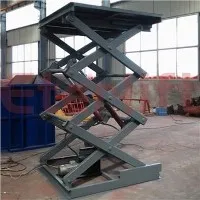
A fixed scissor lift typically consists of:
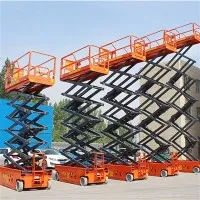
A scissor arm mechanism (crossed bars forming an "X")
A platform (top)
A base (bottom)
An actuator (e.g., hydraulic cylinder)
2. Identify Key Factors
The maximum load depends on:
Material strength of the scissor arms and pins
Geometry (length of arms, pivot points, angle)
Actuator force capacity
Stability and support conditions (fixed, roller, pinned ends)
3. Use Static Equilibrium and Force Analysis
At full extension, calculate the mechanical advantage (MA) of the scissor:

L: length of one scissor arm
d: horizontal distance from the base to the actuator
θ: angle between the arm and horizontal
4. Check Strength of Components
For safety, the load must not exceed the yield or buckling limit of components:
Pin and joint strength (shear and bearing stress)
Scissor arm (check for bending and buckling)
Hydraulic cylinder (force limit and pressure ratings)
Use formulas like:

E: modulus of elasticity
I: moment of inertia
K: effective length factor
5. Include Safety Factor (SF)
Use a safety factor of at least 1.5–3 depending on application: