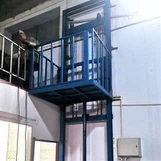
The scissor structure is widely used in the design of scissor lifts, which are mechanical devices designed to provide vertical movement for lifting loads or people. Here's how the scissor structure is utilized and its functional design:
How the Scissor Structure Works in Lifts
The scissor structure in lifts consists of a series of interlocking metal supports arranged in an "X" pattern, resembling the blades of scissors. These "X"-shaped supports, also called pantograph arms, expand and contract to raise and lower the platform. Here's how it works:
1.Vertical Motion Through Expansion and Contraction:
- When force is applied (e.g., by a hydraulic system, pneumatic system, or mechanical screw), the "X" supports are pushed apart at their pivots.
- This expands the structure vertically, lifting the platform.
2. Controlled Descent:
- To lower the platform, the force is gradually reduced, allowing the "X" supports to collapse inward, lowering the lift in a controlled manner.
Key Components of a Scissor Lift
1. Base Frame:
- Provides stability for the scissor mechanism and serves as the foundation for the lift.
2. Scissor Arms (Pantograph):
- The interlocking metal arms that expand and collapse to create vertical movement.
3. Platform:
- The load-bearing top of the lift that supports people, tools, or materials.
4. Actuation System:
- Hydraulic Actuators: Commonly used to apply force to the scissor arms, offering smooth and powerful motion.
- Pneumatic Actuators: Use compressed air for motion, typically found in lightweight applications.
- Mechanical Screws/Chains: A less common option that uses rotating screws or chains to lift the arms.
5.Rollers and Tracks:
- Facilitate smooth motion of the scissor arms along the base.
6. Control System:
- Allows the operator to raise or lower the lift precisely, often via a joystick, buttons, or levers.


Hot Tags: 3ton stationary lift tables, China, manufacturers, suppliers, factory, customized, buy, cheap, for sale, made in China