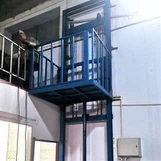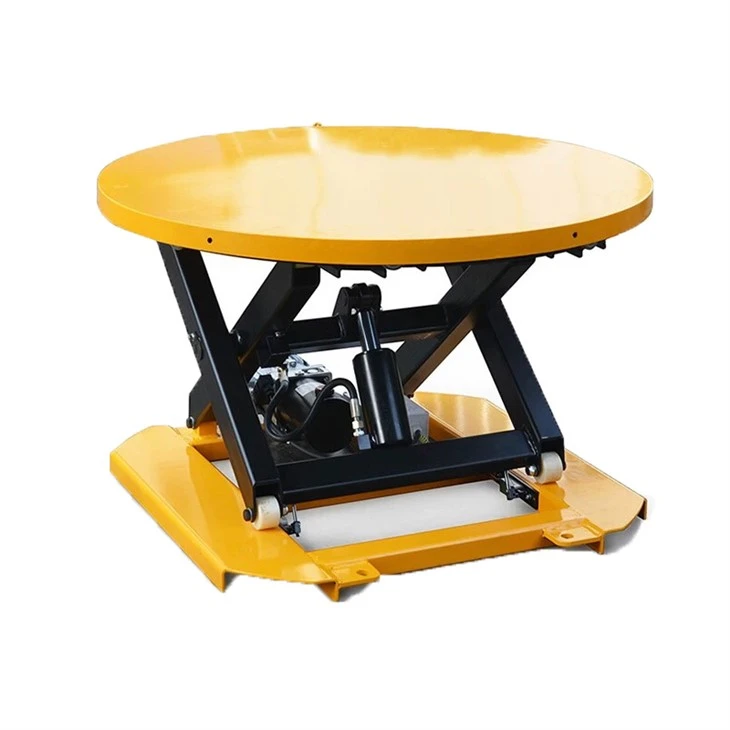


Producing customized stationary scissor lift platforms involves several stages, including design, material selection, fabrication, assembly, and safety considerations. Here's a step-by-step guide to help you through the process:
1.Design and Specifications
Capacity and Load Requirements: Determine the load capacity the lift needs to handle, which could range from a few hundred kilograms to several tons, depending on the application.
Platform Size: Define the dimensions of the platform. This could be a single, small lift or a larger, multi-sectional platform depending on your requirements.
Height Range: Decide on the maximum height the lift needs to reach. Scissor lifts typically provide vertical travel, so the height range is critical in designing the lift's mechanisms.
Power Source: Consider whether the lift will be powered hydraulically, electrically, or pneumatically. Hydraulic systems are common for larger lifts, while smaller lifts might use electric or manual drives.
Control Systems: Choose between manual controls or automated, programmable systems with features such as emergency stop, load sensors, and platform leveling.
2.Material Selection
Frame and Base: Use high-strength steel (e.g., ASTM A36) for the main frame to handle the mechanical stresses. Stainless steel or aluminum may be considered if corrosion resistance is necessary.
Scissor Mechanism: The arms of the scissor mechanism need to be made from durable steel or alloy to ensure they can withstand bending and torsion forces.
Platform Surface: Non-slip steel or aluminum is commonly used for the platform surface to provide stability when standing on the lift. Rubber mats can be added for additional slip resistance.
Hydraulic Components: Choose high-quality hydraulic cylinders, pumps, and valves that meet your load requirements and provide smooth lifting and lowering motions.
3.Fabrication Process
Cutting and Shaping: Cut the materials to the required dimensions using CNC machines, plasma cutters, or oxy-fuel cutting. Ensure that all components are accurately shaped for proper alignment during assembly.
Welding: Weld the frame and scissor arms using a suitable welding technique like MIG or TIG to ensure strong joints. Structural integrity is paramount to prevent any failure under load.
Assembly of Mechanisms: Assemble the scissor arms, base, and platform. The scissor arms should be placed in a configuration that ensures balanced lifting and even load distribution.
Hydraulic Integration: Install hydraulic cylinders between the scissor arms. Ensure that hydraulic hoses are properly connected, with secure fittings to prevent leaks.
4.Safety and Features
Overload Protection: Integrate overload sensors or pressure relief valves in the hydraulic system to prevent overloading and potential damage.
Emergency Stop: Install an emergency stop button that immediately halts the lift's operation in case of a malfunction.
Anti-Slip Features: Ensure the platform surface has anti-slip features, such as textured or rubberized coatings.
Guardrails: Depending on the design and application, guardrails or safety barriers around the platform may be needed for worker safety.
Limit Switches: Install limit switches to prevent the lift from over-traveling at the top or bottom of its range.
5.Testing and Quality Control
Load Testing: Perform load tests to ensure the lift can safely handle the maximum weight it is rated for. This should be done in a controlled environment with a safety margin.
Functionality Testing: Test the platform's movement to verify smooth lifting, lowering, and stability. Check all controls, valves, and mechanisms for proper operation.
Safety Testing: Test all safety features such as emergency stops, sensors, and overload protections to ensure they work effectively.
6. Final Assembly and Installation
Once the lift has passed all tests, you can proceed with final assembly and installation at the desired location. Ensure the lift is securely anchored to the floor and properly connected to power supplies.
Train operators on safe usage, maintenance, and troubleshooting.
7.Ongoing Maintenance
Set up a maintenance schedule to inspect the hydraulic system, check for wear on the scissor arms, and lubricate moving parts. Regular checks will prolong the lift's lifespan and ensure safe operation.


Hot Tags: customized stationary scissor lift platforms, China, manufacturers, suppliers, factory, customized, buy, cheap, for sale, made in China