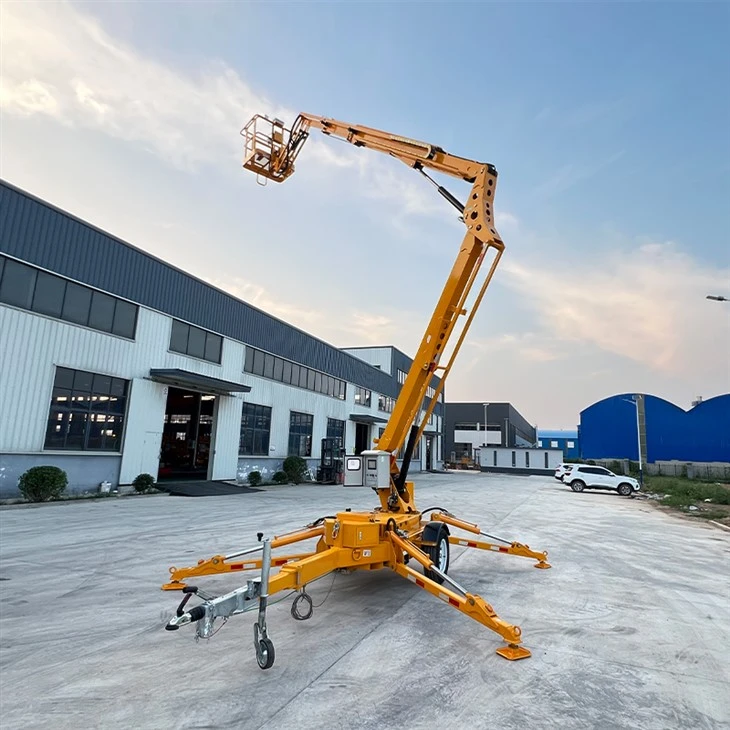

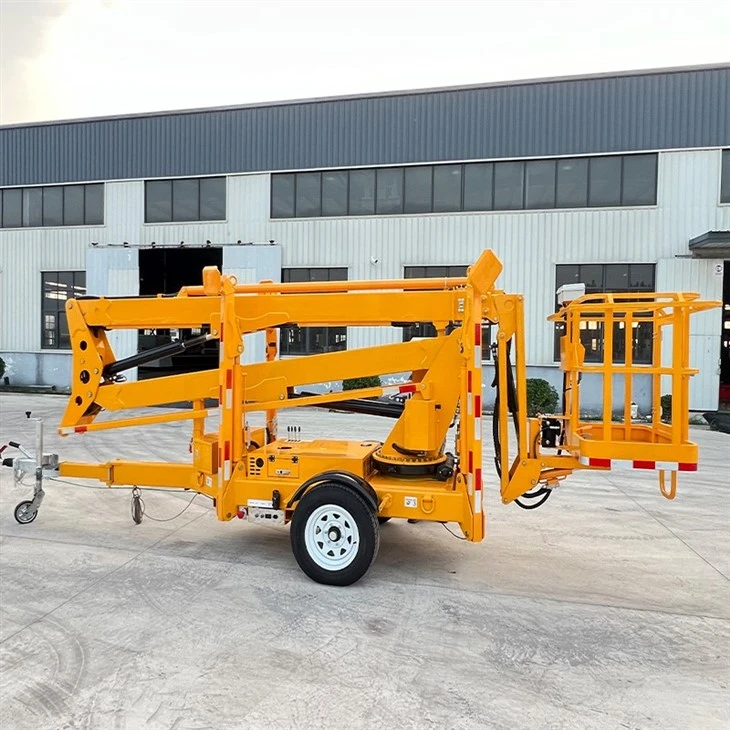
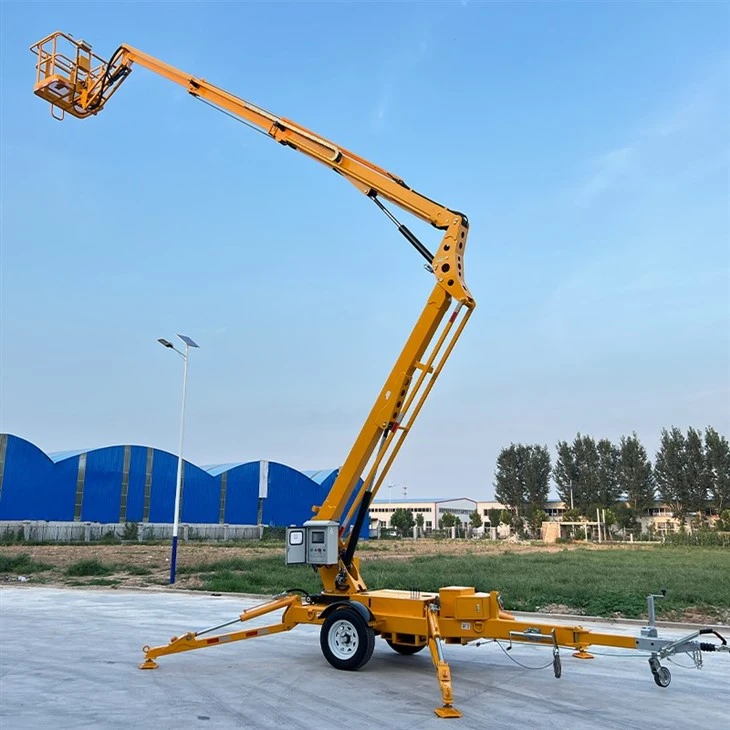
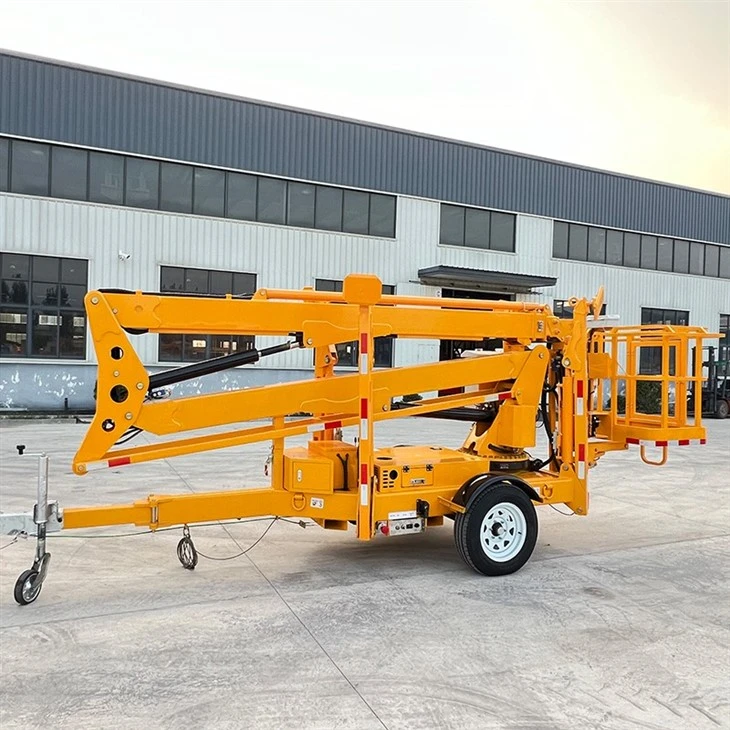
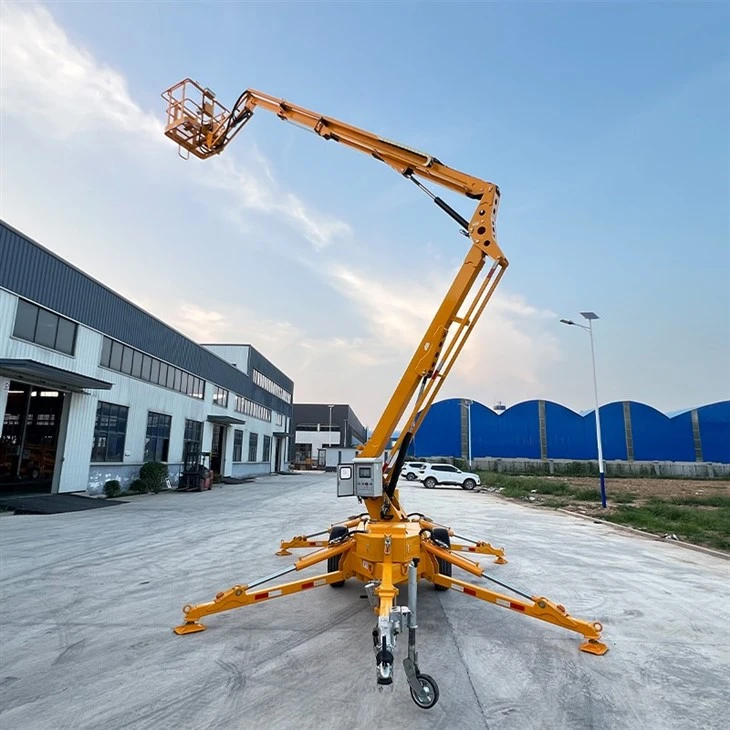
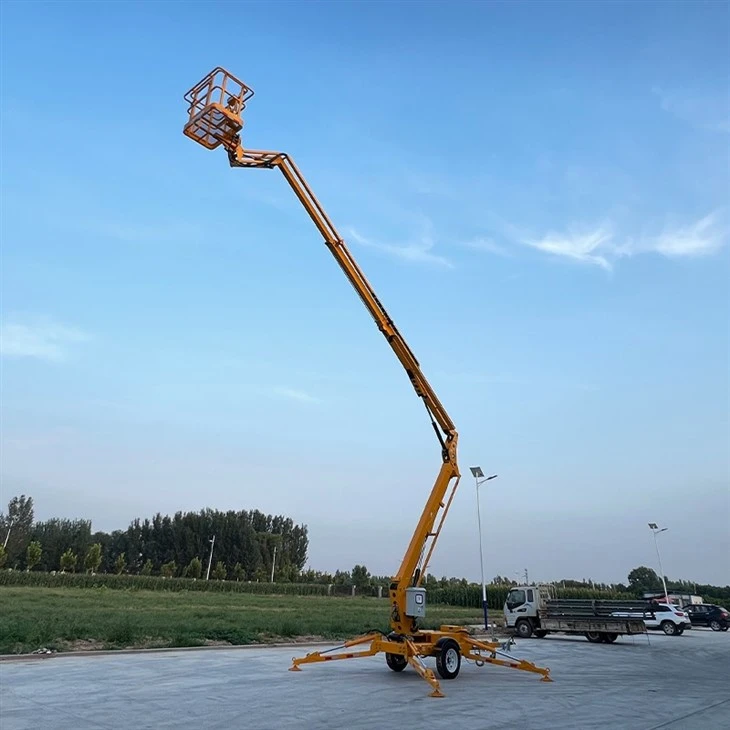
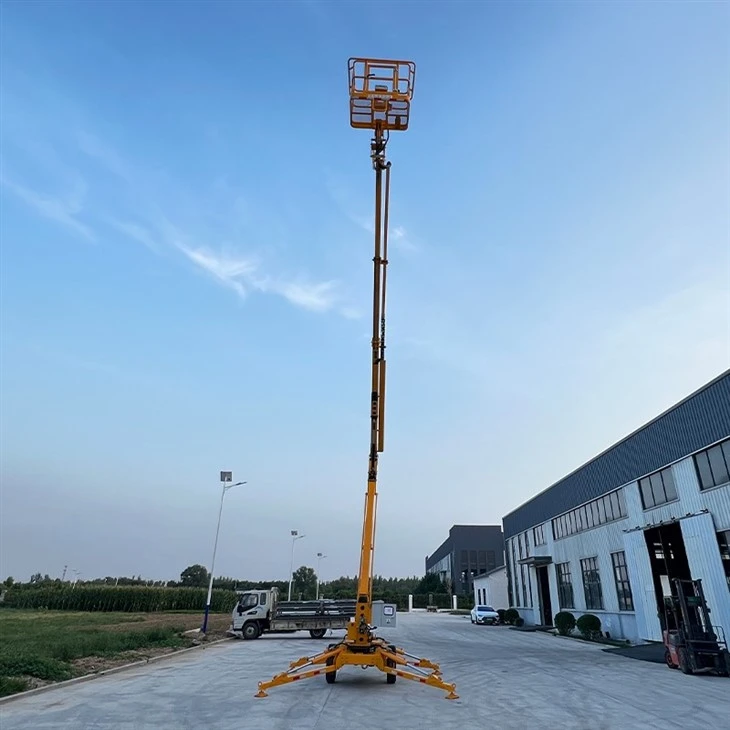
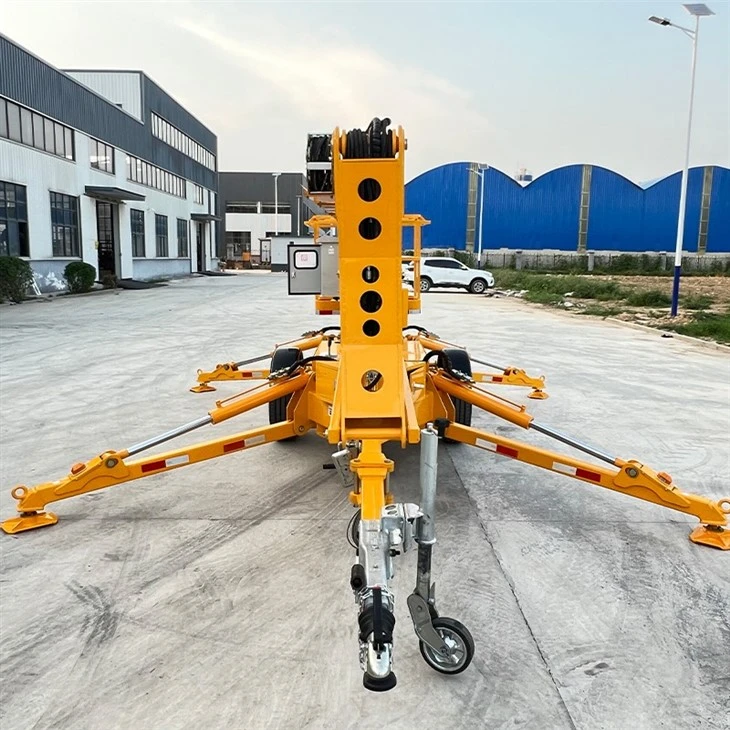


| Model | Platform size | Total size | Height | Weight | Max working radius | Net weight |
| TGZ-8 | 1200*800 | 5200*1585*1900 | 8m | 200KG | 4.5M | 1500kg |
| TGZ-10 | 1200*800 | 5400*1665*1900 | 10m | 200KG | 5M | 1700kg |
| TGZ-12 | 1200*800 | 6400*1665*1900 | 12m | 200KG | 6M | 2000kg |
| TGZ-14 | 1200*800 | 6200*1730*2100 | 14m | 200KG | 8.5M | 2350kg |
| TGZ-16 | 1200*800 | 7000*1730*2200 | 16m | 200KG | 9M | 2600kg |
| TGZ-18 | 1200×800 | 7100×1850×2260 | 18m | 200KG | 10 | 4300kg |
| TGZ-20 | 1200×800 | 7700×1850×2260 | 20m | 200KG | 12M | 4450kg |


Trailer Boom Lift Cylinder Seal Replacement Frequency | Complete Maintenance Guide
Core Keyword: trailer boom lift cylinder seal replacement frequency
Long-tail Keywords: how often to replace boom lift hydraulic seals, trailer mounted boom lift seal service life, hydraulic cylinder seal maintenance for aerial work platform, when to change boom lift cylinder seals
LSI Keywords: hydraulic seal wear, aerial lift maintenance schedule, cylinder leakage troubleshooting, PU seal vs FKM seal lifespan, construction equipment hydraulic maintenance
Knowing the trailer boom lift cylinder seal replacement frequency is critical for safe, efficient, and cost-effective aerial equipment operation. Hydraulic cylinder seals are wearable core components that prevent oil leakage, maintain lifting pressure, and avoid boom drift or platform sinking. Most trailer-mounted boom lift failures come from aging or worn seals, not mechanical breakdowns.
Many equipment owners only replace seals after oil leaks occur, leading to sudden downtime, safety hazards, and higher repair costs. This guide shares the standard replacement cycle based on working hours, service years, operating conditions, and seal materials, helping you arrange proactive maintenance correctly.
1. Standard Trailer Boom Lift Cylinder Seal Replacement Cycle
Trailer boom lift hydraulic seals mainly include NBR (nitrile rubber) and PU (polyurethane) seals (factory standard) and FKM (fluorine rubber) high-end optional seals. The replacement cycle is divided into time-based aging cycle and hour-based wear cycle, covering all common usage scenarios.
1.1 Time-Based Replacement Schedule (Aging Failure)
Even if the equipment is idle for a long time, rubber seals will age, harden, and lose elasticity due to UV rays, temperature changes, and air oxidation. Time-based maintenance is mandatory.
Light-duty use (≤3 days/week, <4 hours/day): Replace all cylinder seal kits every 3 years. Suitable for occasional factory, warehouse, and residential maintenance work.
Regular rental/construction use (5–7 days/week, 6–8 hours/day): Full seal replacement every 2 years. High-frequency telescoping and pressure switching accelerate seal fatigue wear.
Harsh outdoor conditions (dust, rain, coastal salt spray): Preventive replacement every 1.5–2 years. UV radiation and corrosive environments greatly shorten seal service life.
FKM fluorine rubber seals (high-temperature/anti-aging upgrade): 4–5 years for normal conditions, 3 years for harsh outdoor environments.
1.2 Working Hour Replacement Standard (Wear Failure)
Hydraulic seals belong to reciprocating friction parts. Working hours are the most accurate judgment basis for wear degree, applicable to all trailer boom lift models.
Standard working conditions: Full set seal replacement at 5000 working hours
Heavy-load/frequent lifting operation: Advance replacement to 3000–4000 working hours
Outrigger cylinder static seals: Wear speed is lower than boom and telescopic cylinders; replace synchronously with main cylinder seals without separate delay
2. Different Cylinder Types, Different Seal Service Life
Not all hydraulic cylinders of trailer boom lifts wear at the same rate. Targeted inspection and replacement can optimize maintenance costs.
2.1 Boom Luffing & Telescopic Cylinders (Dynamic Main Cylinders)
These core working cylinders bear frequent reciprocating movement and fluctuating high pressure. The seal lip wears the fastest, with the highest leakage risk. Strictly follow the 2–3 year or 3000–5000-hour replacement cycle, no prolonged service is allowed.
2.2 Outrigger Cylinders
Outrigger cylinders work in a static pressure-holding state for a long time, with less friction wear. However, the external dust ring is easy to accumulate sand and dust, causing piston rod scratches. It is recommended to replace seals together with the main cylinder during major maintenance.
2.3 Fine-Tuning & Rotary Cylinders
Medium action frequency and stable pressure. Unify the overall replacement cycle to avoid scattered maintenance and repeated shutdowns.
3. Key Factors That Shorten Seal Replacement Cycles
Many devices leak oil in less than one year, far ahead of the standard cycle, mainly due to adverse working environments and improper maintenance. The following factors will cause seal life to drop sharply by 30%–50%.
3.1 Severe Operating Environments
Long-term outdoor exposure, sun exposure, rain erosion, and coastal salt fog corrosion will accelerate seal aging and cracking. Construction sites with heavy dust and gravel will damage the dust ring, and sediment will scratch the piston rod, cutting the seal and causing rapid failure.
3.2 Unclean Hydraulic Oil (No.1 Cause of Early Seal Damage)
Dirty hydraulic oil, metal debris, and blocked filter elements will continuously grind the seal lip, resulting in internal leakage and oil seepage. Poor oil cleanliness can even cause seal failure within 6–12 months.
3.3 Improper Operation & Vibration Wear
Long-term full-load limit lifting, sudden start-stop impact, and jitter during trailer transportation will cause unilateral stress and eccentric wear of cylinder seals, accelerating fatigue damage.
3.4 Lack of Daily Maintenance
Failure to clean the piston rod regularly, damaged dust covers, and mixed use of non-standard hydraulic oils will cause seal swelling, hardening, and loss of elasticity.
4. Signs for Immediate Seal Replacement (Do Not Wait for the Cycle)
Scheduled preventive replacement is the core of maintenance, but once the following faults occur, stop the machine and replace the seals immediately to avoid safety accidents.
Visible oil seepage or dripping on the piston rod, with oil sludge accumulation on the dust ring
Cylinder internal leakage: boom sinking automatically, outriggers retracting spontaneously, insufficient lifting power
Piston rod scratches, rust spots, or peeling chrome plating
Disassembled seals show hardening, cracking, chipping, and permanent deformation
Turbid and black hydraulic oil mixed with rubber debris
5. Professional Maintenance Tips for Trailer Boom Lift Seals
Standard replacement operations can extend the new seal service life and reduce repeated maintenance costs.
Replace seals in sets: Do not replace a single leaking seal alone. Replace all cylinder seal kits of the whole machine synchronously to avoid frequent failures of other cylinders.
Check the piston rod first: Repair and polish scratches on the piston rod and cylinder wall before replacing new seals, otherwise new seals will be damaged quickly.
Half-year visual inspection: Regularly check the piston rod for scratches and oil seepage, and replace damaged dust covers in time.
Harsh environment upgrade: For coastal and high-dust rental scenarios, shorten the cycle to 1.5–2 years or directly upgrade to FKM high anti-aging seals.
6. FAQ About Boom Lift Cylinder Seal Replacement
Q1: Is it necessary to replace all seals even if there is no oil leakage?
Yes. Rubber seals have fixed aging fatigue life. Invisible internal leakage will cause boom instability and hidden safety hazards. Preventive replacement is more economical and safer than failure replacement.
Q2: Do outrigger cylinder seals need the same replacement cycle as boom cylinders?
Yes. Although outrigger seals wear slowly, dust and moisture are easy to invade. Synchronous replacement can avoid secondary disassembly and maintenance.
Q3: Can poor hydraulic oil quality affect seal service life?
Absolutely. Impurities in hydraulic oil are the main cause of seal abrasion and early failure. Replace hydraulic oil and filter elements regularly together with seals.
Conclusion
The trailer boom lift cylinder seal replacement frequency mainly depends on usage intensity, working hours, operating environment, and seal material. For most users, the standard cycle is 2–3 years or 3000–5000 working hours. High-frequency rental and harsh environments require advanced preventive replacement.
Adhering to periodic seal replacement and daily hydraulic system maintenance can effectively reduce equipment failure rate, prolong the service life of trailer boom lifts, and ensure the safety of aerial work.
Hot Tags: 10m boom lift, China, manufacturers, suppliers, factory, customized, buy, cheap, for sale, made in China