





The length of the outriggers on a boom lift is determined based on multiple safety and structural stability factors, especially lifting height. Here's how it works:
1.Basic Principle: Higher Lift = Greater Instability
As the lifting height increases, the center of gravity rises and the risk of tipping increases due to the long horizontal and vertical reach of the boom. To counteract this, longer outriggers are used to:
Widen the base support area (increasing stability)
Distribute load more evenly on the ground
2.Stability Triangle / Base of Support
Boom lifts use the concept of a stability triangle or support polygon. The outriggers extend to create a wide enough base to keep the center of gravity within the safe tipping zone during boom extension and rotation.
The required outrigger length is typically calculated to maintain:
A minimum base width-to-height ratio, often at least 1:0.1 or more
Dynamic load factors when the boom is moving, not just static weight
Practical Examples
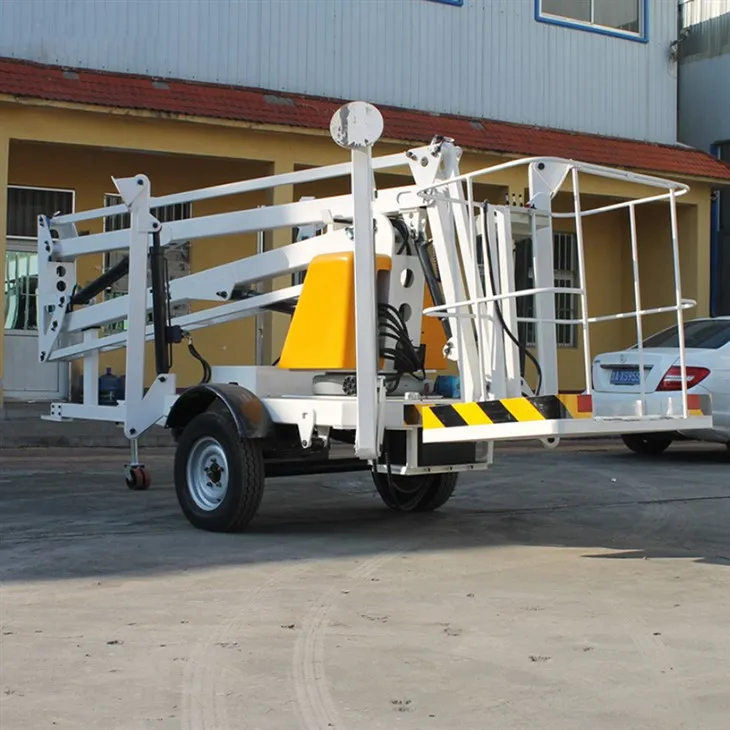
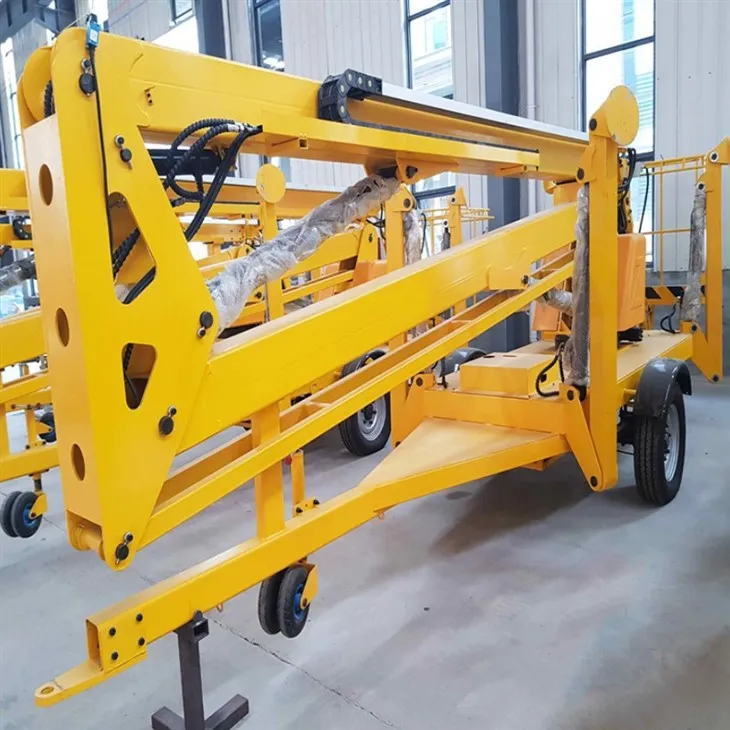
Small towable boom lift (e.g. 10–12 m height)
→ Short outriggers, \~1.2–1.5 m extension
Articulating boom lift (e.g. 20–30 m height)
→ Outriggers may extend 2–3 m or more on each side
Truck-mounted telescopic boom (e.g. >30 m height)
→ Extend up to 4–6 m or more, depending on boom configuration and load


Hot Tags: towable telescopic boom lift, China, manufacturers, suppliers, factory, customized, buy, cheap, for sale, made in China