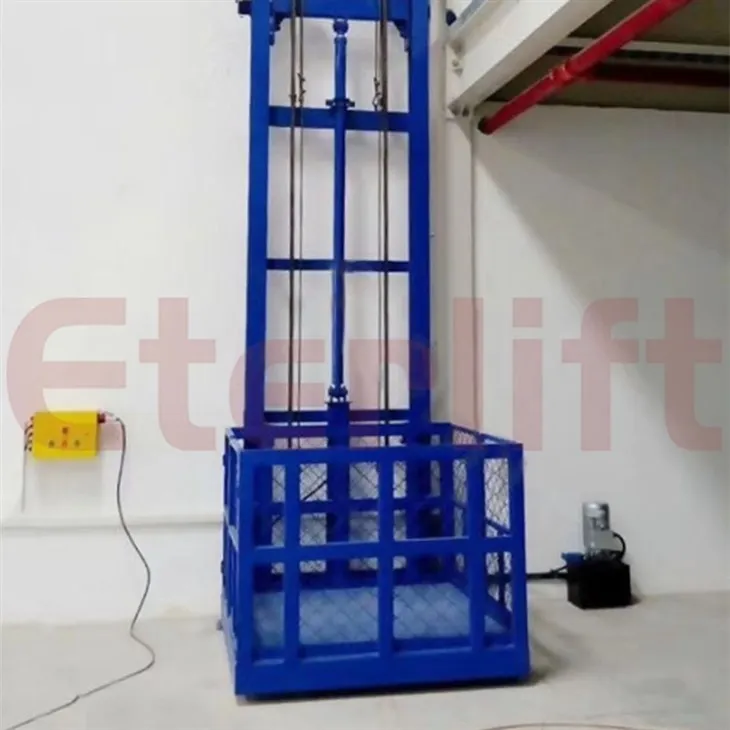


Qingdao Eterlift Machinery Co., Ltd. is one of the leading manufacturers and suppliers of residential hydraulic guide railway cargo lifts in China, also supports customized service. As we have world-leading production equipment and strong manufacturing capabilities, we warmly welcome you to buy durable residential hydraulic guide railway cargo lifts made in China here from our factory.

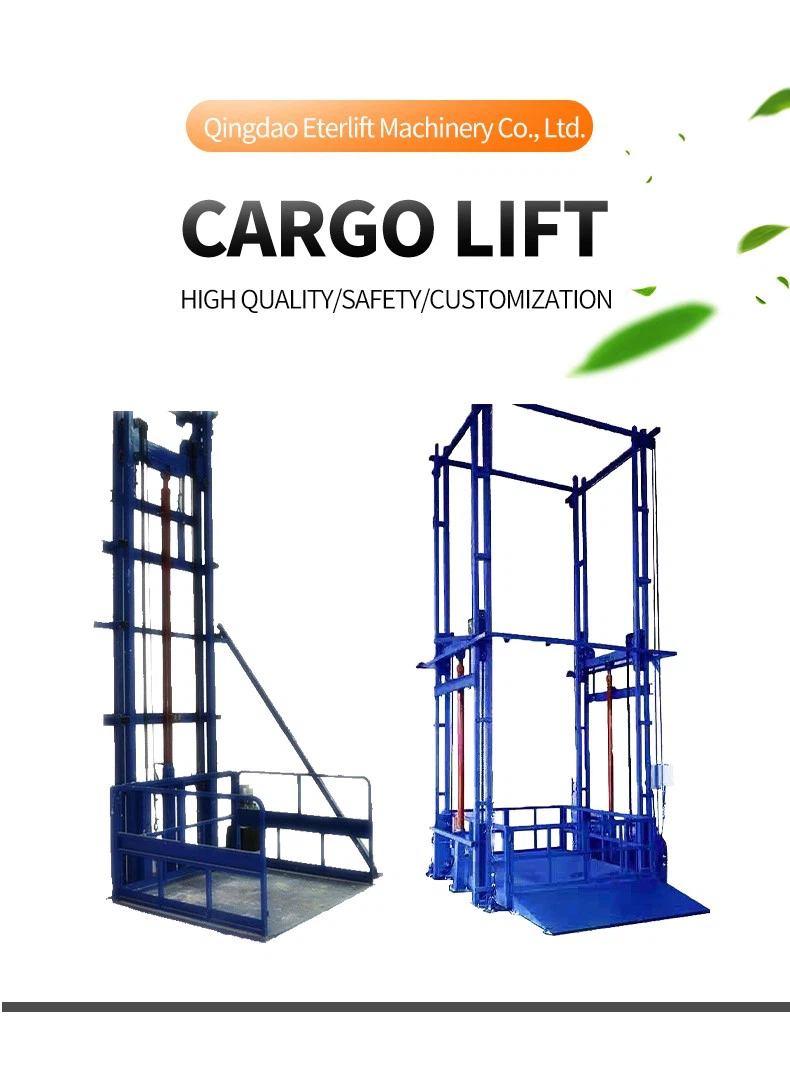


The hydraulic guide rail cargo lift is an essential industrial equipment that helps to lift heavy goods up or down between floors in a building. Unlike other types of lifts, the hydraulic guide rail cargo lift operates on the principle of hydraulic pressure to complete the lifting work. This innovative technology has transformed the cargo lift industry by providing efficient, reliable, and cost-effective solutions that meet the needs of modern businesses.
The hydraulic guide rail cargo lift has various components that work in harmony to lift cargo. The most significant parts include the hydraulic cylinder, pump, motor, guide rail, and control system. The hydraulic cylinder is a critical component of this type of lift. It converts the fluid pressure into lifting force, which raises the cargo from one level to another. The hydraulic pump generates pressure by pumping fluid into the cylinder, which compresses the piston and drives the lift. The motor provides the necessary power to the pump, ensuring that it continues to operate efficiently.
Another essential component of the hydraulic guide rail cargo lift is the guide rail. The guide rail provides support and guidance for the lift to move smoothly up and down. The rail ensures that the lift remains aligned with the floor at all times, thereby preventing any accidental tilting or collapse. Without a guide rail, the lift would be unstable and pose a severe safety risk to the operators and cargo.
The control system is also an integral component of the hydraulic guide rail cargo lift. The control system allows the operator to start and stop the lift, adjust the speed and direction of travel, and monitor the status of the lift. Modern hydraulic guide rail cargo lifts have advanced safety features that prevent overloading, overshooting, and sudden drops. The control system is designed to operate the lift smoothly, silently, and quickly, enhancing the overall efficiency of the cargo lift.
The hydraulic guide rail cargo lift works seamlessly with the help of all these components. When the operator initiates the lift command, the hydraulic pump receives the instructions to pump fluid into the hydraulic cylinder. The fluid flows into the cylinder through a series of valves and tubes, causing the piston to pressurize. The pressurized piston moves up and exerts force on the lift platform, raising the cargo to the desired level. When the operator stops the lift command, the flow of fluid is reversed, and the lift platform slowly descends to the starting level.
Hydraulic guide rail cargo lifts have several advantages over other types of cargo lifts. Firstly, they are incredibly durable and resistant to wear and tear. The hydraulic cylinder is constructed from high-quality materials, ensuring that it can handle heavy loads without breaking down. Secondly, hydraulic guide rail cargo lifts consume less power and are more energy-efficient compared to other types of lifts. The hydraulic pressure system uses less energy to operate, making it an environmentally friendly choice for businesses. Finally, hydraulic guide rail cargo lifts require minimal maintenance. They have few moving parts that require lubrication, making them less susceptible to component failure.
In conclusion, hydraulic guide rail cargo lifts are a vital tool for any manufacturing, logistics, or warehousing business. They provide a safe, efficient, and cost-effective way of transporting heavy goods from one level to another. Through the use of hydraulic pressure, the lift smoothly and reliably transports cargo. By investing in a hydraulic guide rail cargo lift, businesses can boost productivity, minimize downtime and reduce costs. These lifts are a significant asset for businesses looking to improve their operations, and they are an essential tool for modern industrial applications.


Hot Tags: residential hydraulic guide railway cargo lifts, China, manufacturers, suppliers, factory, customized, buy, cheap, for sale, made in China, 1000kg Loading Electric Goods Lift, 2 Floor Small Cargo Elevator, 3m Lifting Height Rail Freight Elevator For Warehouse, Chain Guide Rail Lifting Freight Elevator, Freight Elevator 1500kg For Warehouse, Warehouse Goods Lift