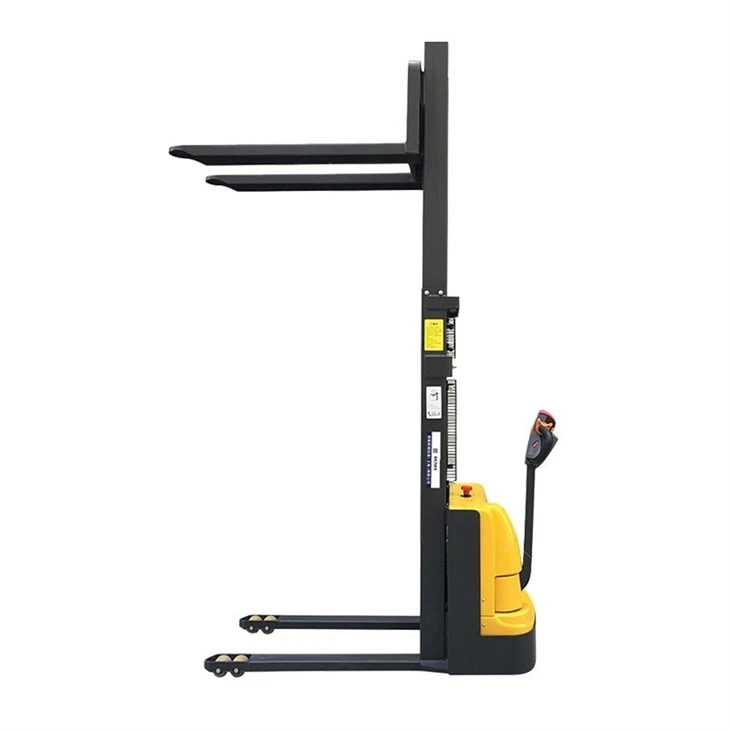
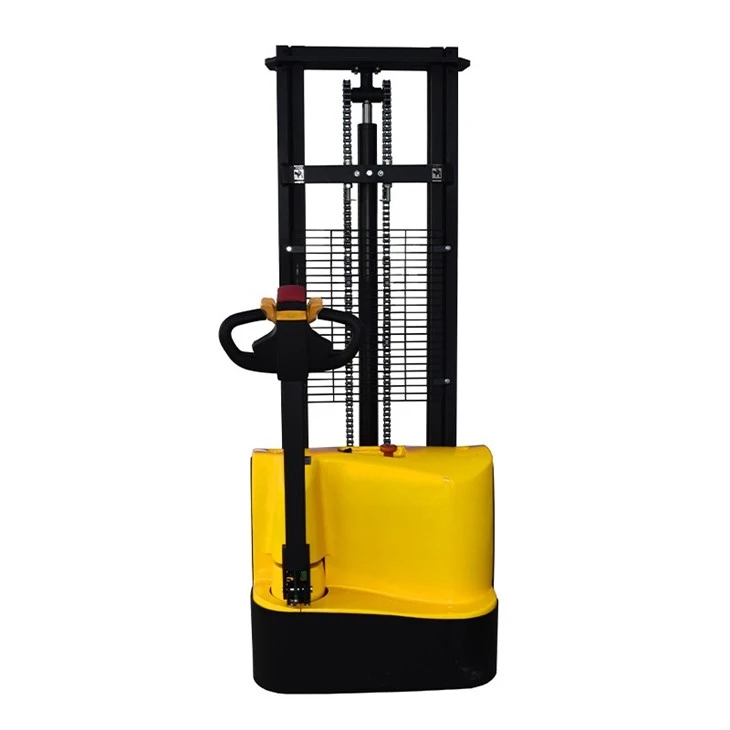
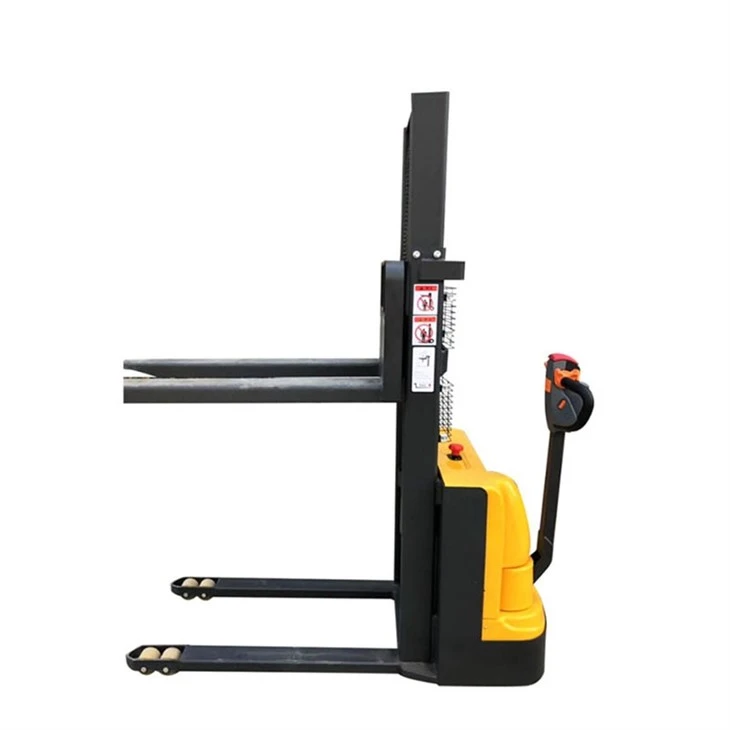


Qingdao Eterlift Machinery Co., Ltd. is one of the leading manufacturers and suppliers of 3m small pallet stacker in China, also supports customized service. As we have world-leading production equipment and strong manufacturing capabilities, we warmly welcome you to buy durable 3m small pallet stacker made in China here from our factory.


If you have ever shopped for a walk-behind stacker for warehouse material handling, you must have noticed a confusing market phenomenon: products with the same rated load (1 ton, 1.5 ton, 2 ton) and lifting height (2m, 3m, 3.5m) often have huge price gaps across different factories. Some budget models are extremely cheap, while branded walkie stackers cost 30%–50% more, even with identical parameter labels.
The price difference of walk-behind stackers is never caused by simple brand premium. It stems from core configuration differences, material and craftsmanship standards, R&D technology, after-sales support, supply chain models, and industry compliance certifications. For warehouse managers and procurement teams, understanding these key factors helps you avoid low-quality knockoffs, select cost-effective equipment, and reduce long-term operation and maintenance costs.
1. Core Three-Electrical System Configuration (The Biggest Price Gap Source)
The core cost of a walk-behind electric stacker lies in the motor, controller, and battery - the three key components that directly determine equipment performance, stability, and service life, and create the largest price difference between manufacturers.
High-end factory models adopt high-power genuine motors, intelligent programmable controllers, and high-capacity lithium batteries. Their motor power is matched with the rated load standard without virtual marking, supporting long-time high-intensity lifting and walking without high-temperature protection or stalling. The controller features stable frequency conversion control, smooth operation, and effective avoidance of cargo shaking and safety hazards. Lithium batteries support fast charging, long cycle life, and stable endurance for all-day warehouse operations.
To cut costs, low-cost small factories generally adopt reduced configurations: brushed motors with insufficient actual power, generic unbranded controllers, and refurbished or capacity-shrunk batteries. These stackers can complete basic lifting work in short-term use, but they are prone to motor overheating, controller failure, and rapid battery attenuation after 1–3 months of frequent use. Frequent failures and battery replacement costs will offset the initial equipment savings, resulting in higher comprehensive costs.
2. Raw Material Quality and Manufacturing Craftsmanship
The exterior of all walk-behind stackers looks similar, but the internal steel structure and production process vary drastically, forming another key price differentiation factor.
Reliable formal manufacturers use high-strength special structural steel for masts and overall frames, with thickened fork plates and reinforced load-bearing structures. The whole machine undergoes precision welding, stress relief treatment, and strict load-bearing testing. Such equipment has strong impact resistance and deformation resistance, and can maintain stable load-bearing performance even in frequent heavy-load handling scenarios, with a service life of 5–8 years.
Low-price stacker factories cut costs by using low-grade C-shaped steel, thin-walled pipes, and recycled materials. They omit fine polishing, anti-rust treatment, and strict load testing processes. Although the appearance is almost the same, the mast is easy to shake and deform during heavy lifting, and the frame is prone to rust and cracking after long-term use, which not only affects handling efficiency but also brings serious safety risks.
3. R&D Investment, Product Design and Stability
Professional material handling equipment manufacturers have long-term R&D investment, focusing on product ergonomic design, safety optimization, and overall performance debugging. Their walk-behind stackers are equipped with anti-slip walking systems, emergency stop protection, overload protection, and mute lifting structures. The operation handle is optimized for long-time manual pushing, which reduces operator fatigue and improves warehouse handling efficiency.
Most low-cost small factories adopt copycat production mode without independent R&D capabilities. They only imitate the appearance of mainstream models, lacking systematic performance debugging and safety optimization. The equipment has problems such as inflexible operation, loud lifting noise, insensitive emergency stop response, and unbalanced load-bearing, which greatly reduces operational safety and applicability.
4. Brand Premium, Supply Chain and Sales Channel Costs
Channel and brand operation costs are important reasons for the price difference of finished stackers. Well-known industrial equipment brands have established standardized dealer and agent systems globally. Multi-level channel distribution, brand marketing, overseas market promotion, and standardized sales management all increase operating costs, so their product prices are 20%–40% higher than those of source factories.
Many low-price stacker suppliers are direct-selling source factories with mature local supporting industrial chains. They omit intermediate agent links, save marketing and channel management costs, and rely on inventory turnover advantages to control product prices at a low level. This is why the same configuration of walk-behind stackers has a huge price gap between brand agents and direct factory sales.
5. After-Sales Service and Warranty Policy Differences
Industrial equipment prices include implicit after-sales value, which is easily ignored by buyers. Formal large factories provide complete after-sales guarantee systems: long-term whole-machine warranty, free technical guidance, global spare parts supply, and quick on-site maintenance services. Once the equipment fails in daily use, the after-sales team can respond quickly to solve the problem and avoid warehouse operation stagnation losses.
Low-cost small factories usually only provide basic short-term warranty, lacking professional after-sales teams and spare parts reserves. After the equipment fails, users often face problems such as slow response, difficult spare parts matching, and high maintenance costs. For long-term warehouse operation, the lack of perfect after-sales service will bring greater hidden costs.
6. Compliance Certification and Customized Configuration
Regular export-oriented manufacturers produce walk-behind stackers in strict accordance with international safety standards, with complete CE certification, ISO quality system certification, and safety inspection reports. The production process complies with standardized industrial specifications, and the product safety and quality are fully guaranteed, which increases certification and quality inspection costs.
In addition, optional customized configurations will also cause price differences. Standard stackers are basic models, while optional accessories such as side shifters, solid anti-wear tires, safety guardrails, and non-standard customized forks will increase the overall equipment cost. Many merchants only quote the basic price, and the subsequent configuration upgrade costs will further widen the actual transaction price gap.
Conclusion: How to Choose a Cost-Effective Walk-Behind Stacker?
The price difference of walk-behind stackers across manufacturers is essentially a gap in configuration, quality, safety, service and technical standards. Low-price equipment seems cost-effective, but it has hidden risks of frequent failures, short service life and potential safety hazards. Brand high-priced products have reliable quality and perfect after-sales service, but the channel premium is relatively high.
For most small and medium-sized warehouses and logistics enterprises, choosing direct-selling source manufacturers with formal certification and moderate configuration is the best solution. It can avoid brand premium and reduce hidden operation risks, achieving a balance of quality, price and after-sales service.
Hot Tags: 3m small pallet stacker, China, manufacturers, suppliers, factory, customized, buy, cheap, for sale, made in China