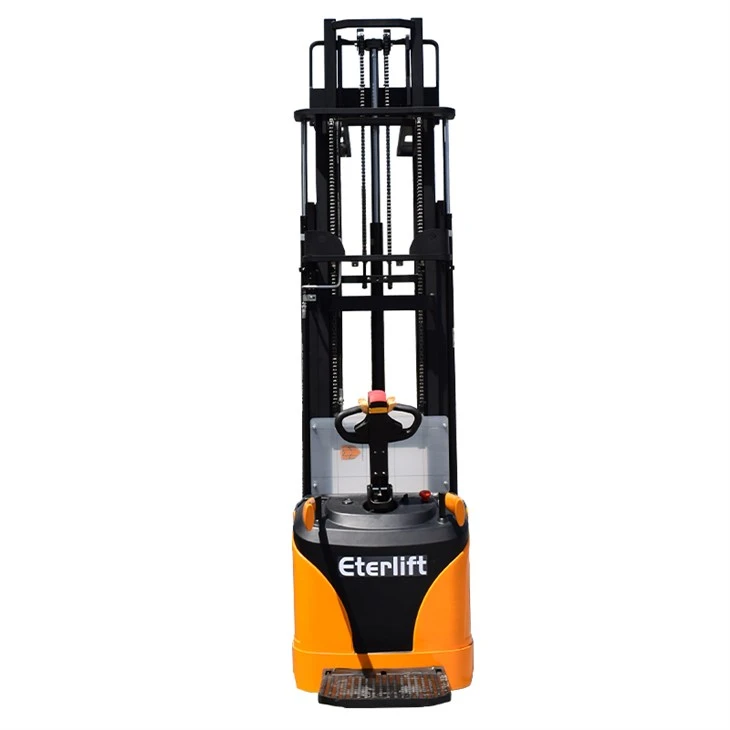

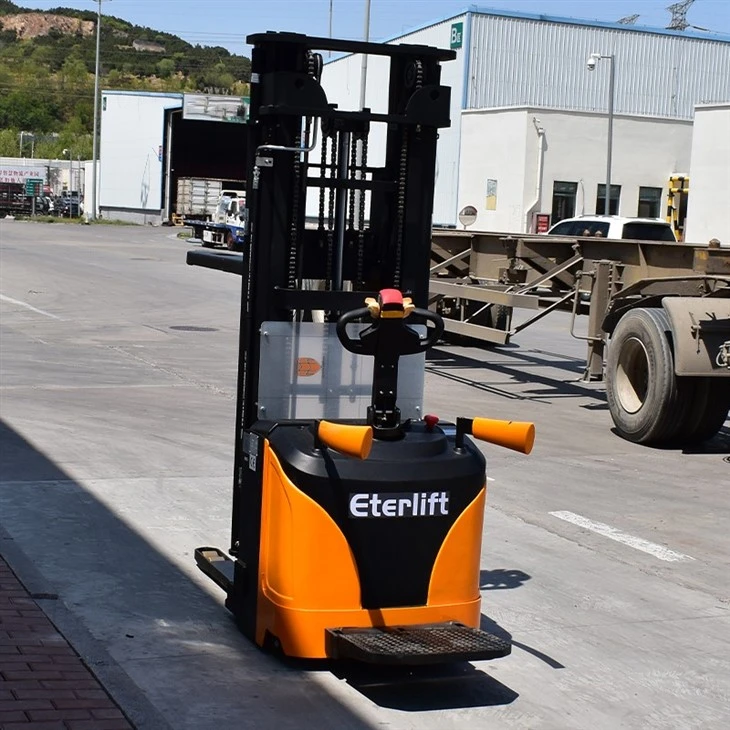
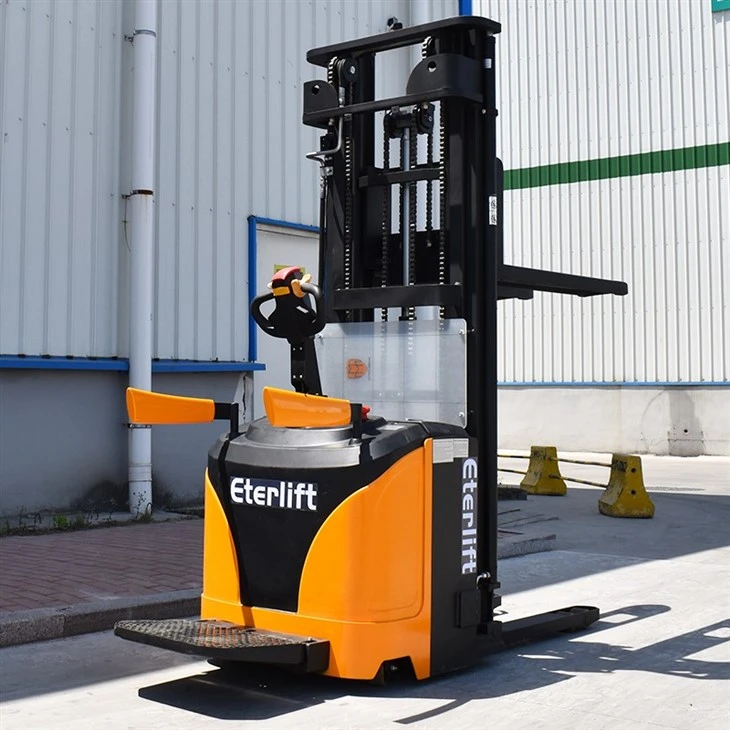
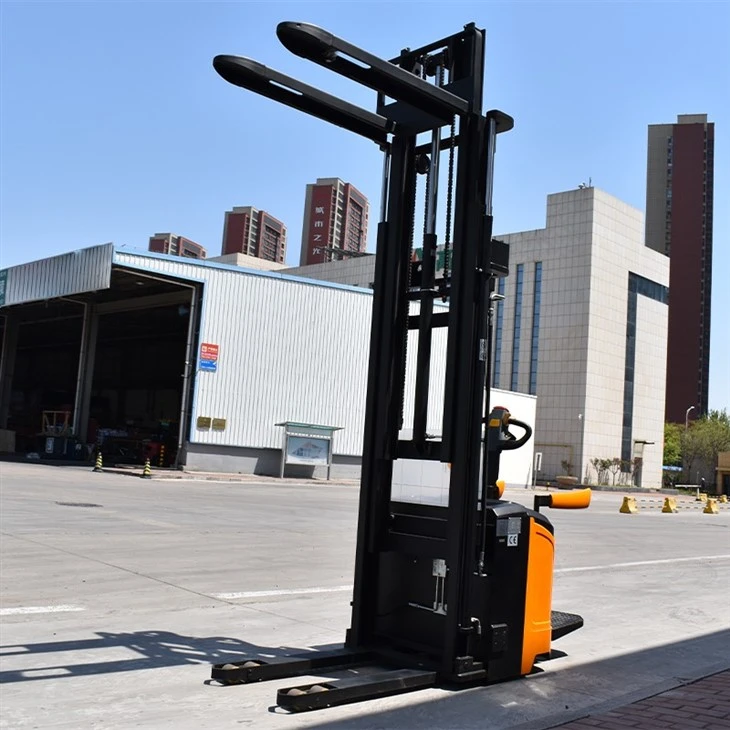
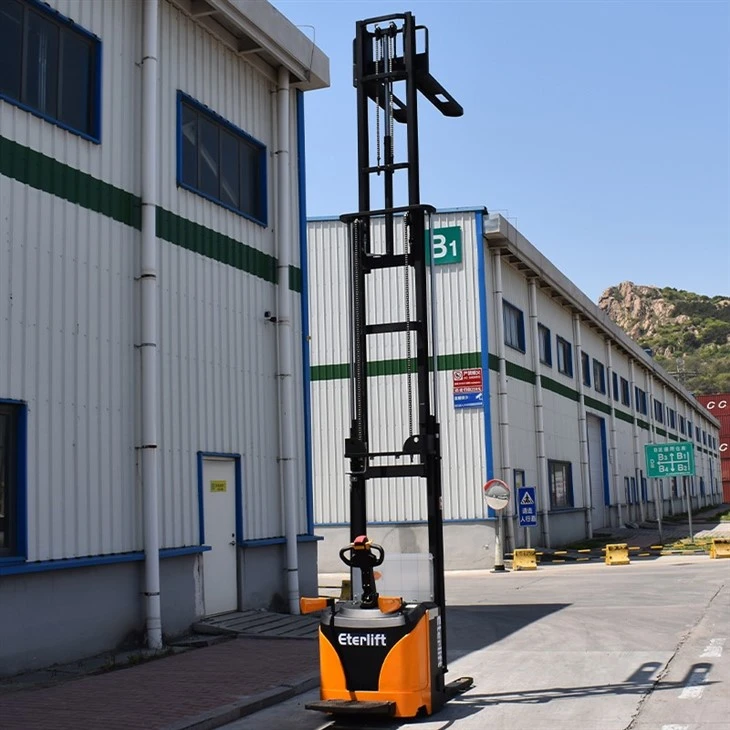
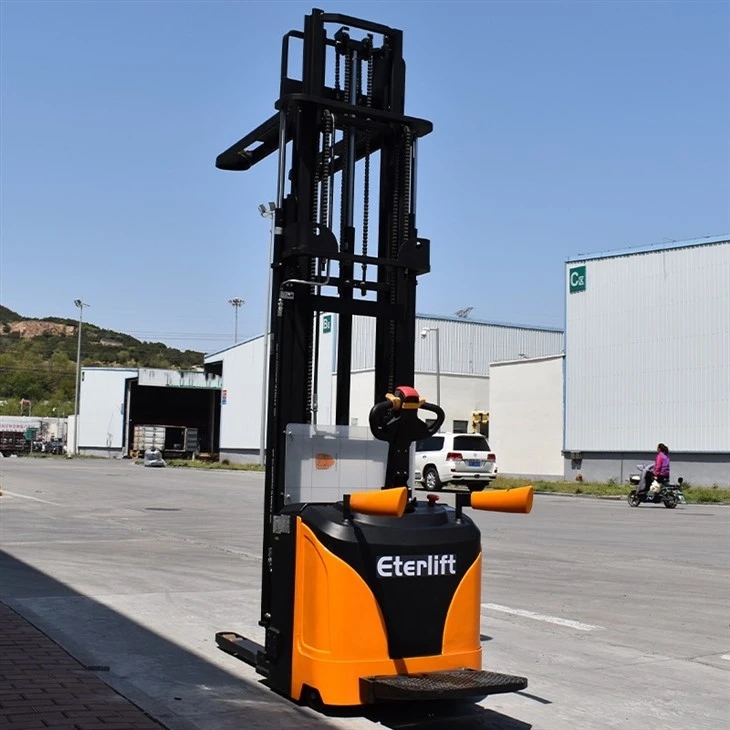
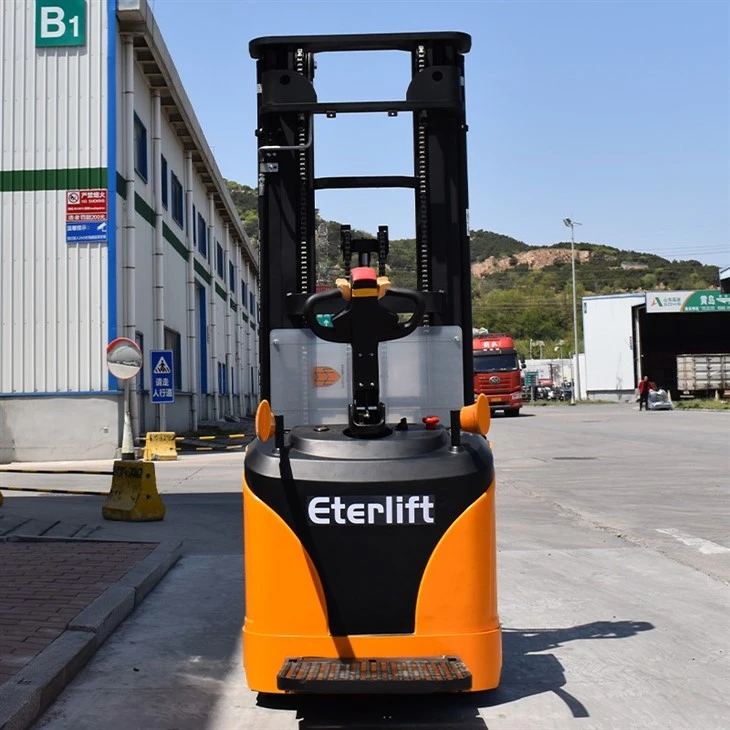
Qingdao Eterlift Machinery Co., Ltd. is one of the leading manufacturers and suppliers of electric 1500kg pallet stacker in China, also supports customized service. As we have world-leading production equipment and strong manufacturing capabilities, we warmly welcome you to buy durable electric 1500kg pallet stacker made in China here from our factory.


Stand-on Stacker Battery Replacement Cycle | Lead-Acid & LiFePO4 Service Life & Replacement Standards
Stand-on stackers are essential electric warehouse equipment for modern logistics, factory stacking, and short-distance material handling. Featuring flexible operation, efficient lifting performance, and compact footprint, stand-on electric stackers are widely used in industrial warehouses, storage centers, supermarkets, and e-commerce fulfillment facilities. As the core power component, the stand-on stacker battery directly determines the stacker's working efficiency, runtime, and operational stability. Most warehouse managers and equipment users ask: How often should you replace the battery of a stand-on stacker? The replacement cycle of stand-on stacker batteries varies significantly depending on battery type, operating intensity, and daily maintenance practices.
This article comprehensively explains the standard replacement cycle, cycle life, and replacement criteria for stand-on stacker lead-acid batteries and stand-on stacker LiFePO4 batteries. It also analyzes key factors affecting battery service life, helping logistics teams accurately schedule battery replacement, reduce maintenance costs, and avoid unexpected equipment downtime.
1. Stand-on Stacker Lead-Acid Battery Replacement Cycle (Traditional Standard Configuration)
Most entry-level electric stand-on stackers come factory-equipped with industrial traction lead-acid batteries. Thanks to their cost-effectiveness and high compatibility, lead-acid batteries remain the mainstream choice for small and medium-sized warehouse applications. Their overall service life and replacement cycle heavily depend on shift schedules, discharging habits, and routine maintenance.
1.1 Standard Service Life and Replacement Timeline
Single-shift 8-hour operation (proper maintenance): 3–5 years with 1,000–1,500 charge-discharge cycles, serving as the standard replacement cycle for regular daily warehouse operations.
Double/triple-shift high-intensity operation: 2–3 years. Frequent heavy-load discharging accelerates plate aging and sulfation, greatly shortening the service life of stand-on stacker lead-acid batteries.
Low-quality battery / zero-maintenance operation: 1.5–2 years. Long-term undercharged storage, lack of water refilling, and deep discharging cause irreversible degradation and premature failure of stand-on stacker lead-acid batteries.
1.2 Replacement Criteria for Stand-on Stacker Lead-Acid Batteries
Instead of strictly following fixed service years, replace your stand-on stacker lead-acid battery immediately if any of the following conditions occur:
Actual battery capacity drops below 80% of the rated capacity, resulting in significantly reduced runtime and inability to complete a full work shift.
Abnormal charging performance, bulging battery casing, excessive heat generation, damaged cells, and unstable voltage output.
Weak full-load lifting performance, frequent voltage drops, sudden shutdowns during operation, and poor battery endurance after full charging.
Severe sulfation issues with no performance recovery after water refilling and equalization charging.
2. Stand-on Stacker LiFePO4 Battery Replacement Cycle (New-Generation Mainstream Option)
Most upgraded high-end full-electric stand-on stackers adopt lithium iron phosphate (LiFePO4) batteries. Compared with traditional lead-acid batteries, stand-on stacker LiFePO4 batteries feature maintenance-free operation, longer lifespan, fast charging support, and zero sulfation loss. Ideal for large warehouses and high-frequency material handling scenarios, LiFePO4 batteries offer a far longer replacement cycle.
2.1 Standard Service Life and Replacement Timeline
Standard single-shift warehouse operation: 7–10 years with 3,000–5,000 charge-discharge cycles, delivering stable long-term power output without abrupt performance degradation.
High-intensity multi-shift operation: 5–7 years. Even under continuous heavy-duty use, LiFePO4 batteries degrade much slower than lead-acid batteries, effectively reducing battery replacement frequency and overall maintenance costs.
2.2 Replacement Criteria for Stand-on Stacker Lithium Batteries
Stand-on stacker LiFePO4 batteries require no water refilling and are free from sulfation problems. Replace the battery promptly if the following faults appear:
Battery capacity decays below 70% of the rated value, failing to meet basic stacking and handling tasks.
Frequent BMS (Battery Management System) protection shutdowns and random power cuts that disrupt workflow continuity.
Excessive cell voltage deviation that cannot be balanced and repaired, accompanied by slow charging speed and rapid power loss.
Damaged, swollen, or leaking battery casing with potential safety hazards.
3. Top 5 Factors Affecting Stand-on Stacker Battery Service Life
The service life of identical stand-on stacker batteries can vary by 2–3 times in different warehouse environments. The core influencing factors are summarized below:
3.1 Operation Shifts and Working Load
Single-shift operation causes minimal battery wear. Continuous double or triple-shift operation keeps the battery under persistent high load, accelerating aging and shortening the stand-on stacker battery replacement cycle significantly.
3.2 Depth of Discharging Habits
Deep full discharging severely damages lead-acid battery plates, causing irreversible loss and reducing lifespan by over 40%. For lithium batteries, long-term low-power storage should be avoided to slow down capacity attenuation.
3.3 Standardized Charging Practices
Stand-on stacker lead-acid batteries require full charging and proper cooling before reuse; frequent shallow charging and discharging is prohibited. LiFePO4 batteries support opportunity charging and fast charging, but long-term 100% full-power storage will accelerate cell aging.
3.4 Daily Maintenance Quality
Lead-acid batteries need distilled water refilling every 1–2 weeks and monthly equalization charging; insufficient water will lead to battery failure within one year. Stand-on stacker lithium batteries are maintenance-free and only require regular circuit and connector inspections to maintain optimal performance.
3.5 Operating Ambient Temperature
High-temperature enclosed warehouses accelerate internal chemical reactions and battery degradation. Extremely low temperatures in cold storage reduce discharging efficiency. Both extreme high and low working temperatures shorten the overall service life of stand-on stacker batteries.


Hot Tags: electric 1500kg pallet stacker, China, manufacturers, suppliers, factory, customized, buy, cheap, for sale, made in China, Electric Stacker Forklift For Warehouse, Electric Stackers Loader, Electric Straddle Stacker, Fully Electric Powered Straddle Stacker, Small Electric Pallet Stacker, Walking Electric Hydraulic Pallet Stacker