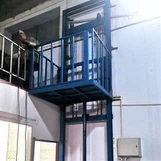
| Model No. | EDR-6 | EDR-8 | EDR-10 | EDR-12 |
| Load Capacity (t) | 6 | 8 | 10 | 12 |
| Platform Size (mm) | 11000*2000 | |||
| Overall Size(mm) | 11000*2000*1400 | |||
| Lifting Height(mm) | 1000~1800 | |||
| Lip Width (mm) | 400 | |||
| Tail Board Length (mm) | 800 | |||
| Operating | Manually or Electric | |||
| Platform Materials | 3mm checked steel plate +7mm steel screen | |||
| Lip Materials | 14mm to20mm Q235B plate | |||
| Tyre | 500-8 solid tyre | |||
| Cylinder Pin | 45# Ø50 rod steel*4 | |||
| Lifting Hydraulic Cylinder | HGS series Ø80/45*2 | |||
| Lip Hydraulic Cylinder | HGS series Ø40/25 | |||
| Hydraulic Oil Pipe | Double wire mesh high pressure tubing 2-10-43MPa | |||
| Hydraulic Oil | ML series antiwear hydraulic oil 6L | |||
| Net Weight(kg) | 2450 to 5000 | |||


Development History of Mobile Dock Ramp
1. Global Evolution
1940s–1950s: Primitive Temporary Ramps After WWII, booming highway freight created demand for adjustable loading bridges. Factories used simple wooden/steel planks without wheels or height adjustment, relying on manual padding, with high safety risks.
1960s–1980s: Mechanized First Generation European & American manufacturers launched wheeled steel ramps with guardrails. Manual jacks adjusted gradient; hand hydraulic pumps were introduced in the 1970s for stepless height adjustment, becoming standard warehouse equipment. Load capacity was limited to 5–8 tons with basic safety structures.
1990s–2020s: Mature Hydraulic Technology High-tensile manganese steel, anti-slip grating, tow bars and solid tires were widely adopted. Dual-cylinder lifting, safety chains and support legs improved stability. Modular production enabled 6–15 ton custom models, and CE safety standards were established globally.
Hot Tags: mobile portable yard ramp, China, manufacturers, suppliers, factory, customized, buy, cheap, for sale, made in China