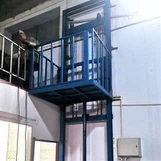
The installation of a stationary scissor lift table requires both structural and safety considerations to ensure stability, load-bearing, and long-term reliability. Here are the main requirements:
1.Foundation Requirements
Concrete Base: A solid, reinforced concrete foundation is needed. Thickness is usually ≥150–300 mm depending on capacity.
Flatness & Levelness: The foundation surface must be flat and level to prevent platform tilting.
Pit Design (if recessed installation):
Pit depth = lift's closed height + floor thickness clearance.
The pit floor must include a drainage channel if installed outdoors.
Protective edge angle irons are recommended to prevent concrete damage.
2.Space & Environment
Installation Position: Should be in a location with sufficient clearance for the maximum lifting height and operation space.
Ventilation: If indoors, the area should allow ventilation for the hydraulic system.
Load Path: Ensure the ground/foundation can safely bear the dynamic load (rated load + self-weight of the lift).
3.Power & Hydraulic System
Electrical Supply: Requires a dedicated power line (usually 380V three-phase, or 220V depending on model).
Hydraulic Unit Position: The pump station can be mounted beside the lift or in a nearby control cabinet, requiring secure installation and protection.
Wiring & Piping: Electrical wiring should follow safety codes, and hydraulic pipes must be firmly fixed with no leakage.
4.Mechanical Fixation
Anchor Bolts: Base frame should be firmly fixed to the foundation with expansion bolts or embedded anchors.
Guide Rail (for high lifting height): For lifts with long travel, wall guide rails may be needed to ensure stability.
5.Safety Requirements
Limit Switches: Upper and lower travel limits must be installed and adjusted correctly.
Emergency Stop: Control system must have an emergency stop button.
Safety Valves: Hydraulic system must include a pressure relief valve and anti-burst valve.
Safety Skirt or Fence: Depending on usage, protective railings, enclosures, or warning signs should be installed.
Overload Protection: Lift should not operate if load exceeds rated capacity.
6.Inspection & Testing
No-Load Test: Run the lift up and down several times to check smoothness, electrical connections, and hydraulic tightness.
Load Test: Test with 110% of rated capacity to verify strength and safety functions.
Certification: In many regions, stationary lifts must pass local safety inspection and acceptance checks before use.


Hot Tags: scissor lifting tables, China, manufacturers, suppliers, factory, customized, buy, cheap, for sale, made in China