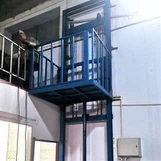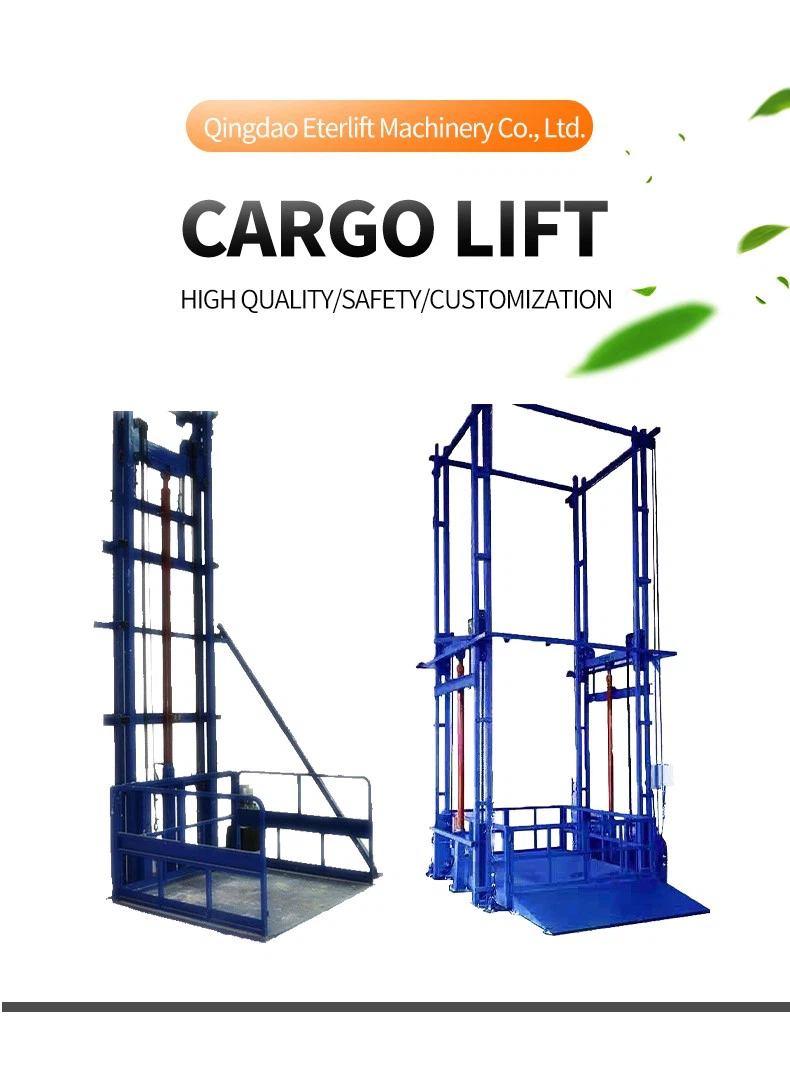


For industrial freight lifts (cargo lifts, material lifts, or freight elevators), there are some important clearance standards between guardrails and platforms to ensure both safety and compliance.
1. Clearance Between Guardrails and Platform Edge
The gap between the platform edge and guardrail (or landing enclosure) should be small enough to prevent a person's foot, hand, or object from slipping through.
Standard requirement:
≤ 120 mm (about 4.7 in) – per EN 81-31.
OSHA and ANSI standards also recommend ≤ 2 inches (50 mm) for most workplace guardrail-to-platform gaps.
If larger gaps are unavoidable (e.g., for loading/unloading with pallets), then toe boards, kick plates, or protective skirting must be added.
2. Guardrail Height & Design
Guardrail height (platform sides):
≥ 1.1 m (43 in) above platform floor (EN 81-31).
42 in (1067 mm) ± 3 in under OSHA for industrial platforms.
Mid-rails: Installed midway between top rail and floor.
Toe boards: At least 100 mm (4 in) high to prevent objects from falling.
3. Platform-to-Shaft / Enclosure Clearance
Clearance between the moving platform and fixed shaft walls/structure:
Typically ≤ 25 mm – 50 mm (1–2 in).
Larger gaps require protective skirting or filler panels.
Purpose: Prevent shearing, crushing, or trapping hazards when the lift moves.
4. Landing Gates and Guardrails
Landing entrances (at each floor) must have gates or doors interlocked with the lift's control system.
Clearance between the platform edge and landing sill:
Usually ≤ 35 mm (1.4 in) to prevent trip hazards.
The guardrail/gate at landings should align flush with the platform when level.


Hot Tags: industrial freight lifts, China, manufacturers, suppliers, factory, customized, buy, cheap, for sale, made in China