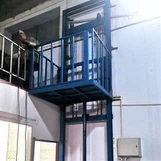
Qingdao Eterlift Machinery Co., Ltd. is one of the leading manufacturers and suppliers of vertical small cargo elevator in China, also supports customized service. As we have world-leading production equipment and strong manufacturing capabilities, we warmly welcome you to buy durable vertical small cargo elevator made in China here from our factory.


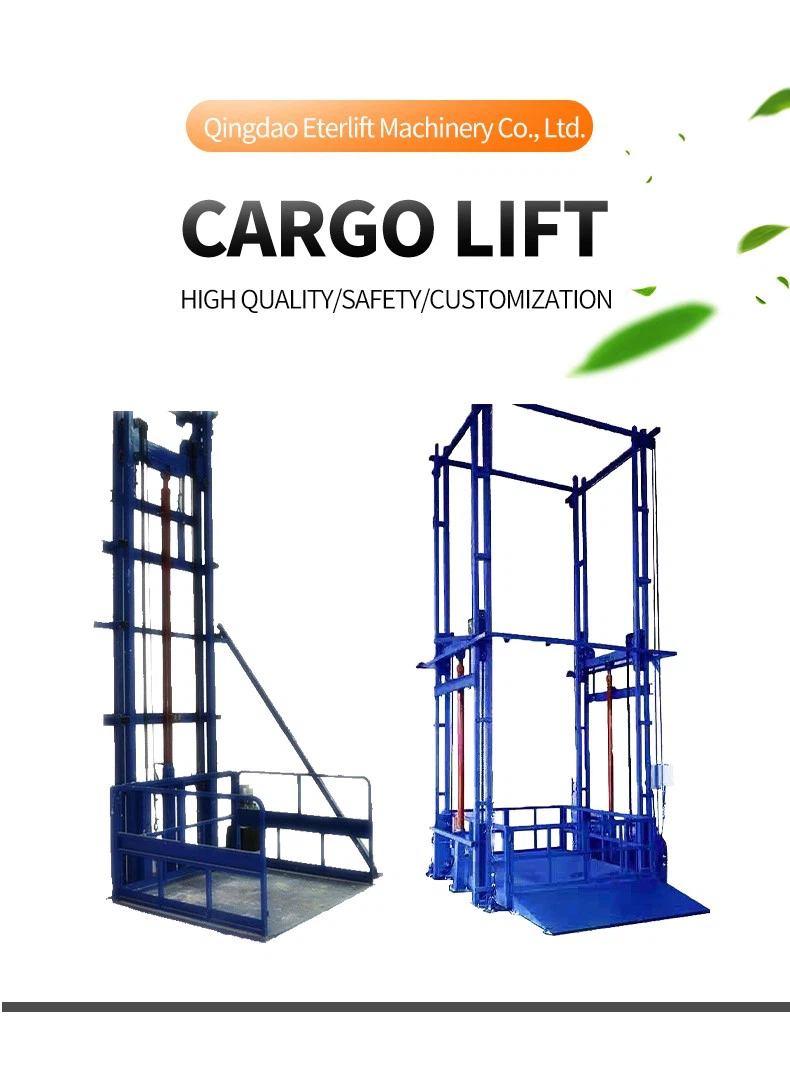


The lifting speed of small cargo lifts (also known as small freight elevators, small goods lifts, or rail-guided cargo lifts) varies depending on the structure and configuration.
For most small rail-guided cargo lifts used in warehouses, shops, factories, and mezzanines:
Standard speed: 3–6 meters/minute (m/min)
High-speed configuration: 4–8 meters/minute
Compared to passenger elevators, small cargo lifts are low-speed and high-load, prioritizing stability and safety over speed.
The factors affecting the lifting speed of a cargo elevator include:
1. Hydraulic pump station power (for hydraulic cargo lifts)
Higher power = faster lifting speed.
However, excessive power may lead to instability or overheating.
Common pump station power: 1.5 kW – 4 kW, depending on the load.
2. Load capacity
The heavier the load on the cargo lift → the slower the lifting speed. The speed usually decreases by 10–30% when approaching the maximum load capacity.
3. Lifting height
Very high lifting heights will reduce the lifting speed of the cargo lift for safety reasons, and the higher the lift, the larger the cylinder. The hydraulic cylinder diameter and oil flow rate also increase.
Larger cylinders and higher flow valves will increase the lifting speed of the cargo lift.
4. Chain specifications (for chain drive systems)
Inappropriate cargo lift chains or multi-chain designs will increase friction, leading to reduced lifting speed. Poor lubrication will also reduce operating speed.
5. Power supply voltage stability
Low voltage (especially 220V single-phase power) results in lower current and slower speed.
Industrial 380V voltage is more stable and provides faster speeds.


Hot Tags: vertical small cargo elevator, China, manufacturers, suppliers, factory, customized, buy, cheap, for sale, made in China